- Available 24/7 — 365 Days a Year
- Toronto & All GTA — Southern Ontario
- IICRC Certified · Insurance Approved
- Residential & Commercial Services

CALL NOW
(416) 657-2222
(416) 657-2222
Biohazard contamination is a serious health and safety risk that requires certified expertise, strict safety protocols, and professional handling. In this real-world showcase video, 247-365 Restoration demonstrates how professional biohazard cleanup is performed — from the initial on-site assessment to final decontamination and clearance.
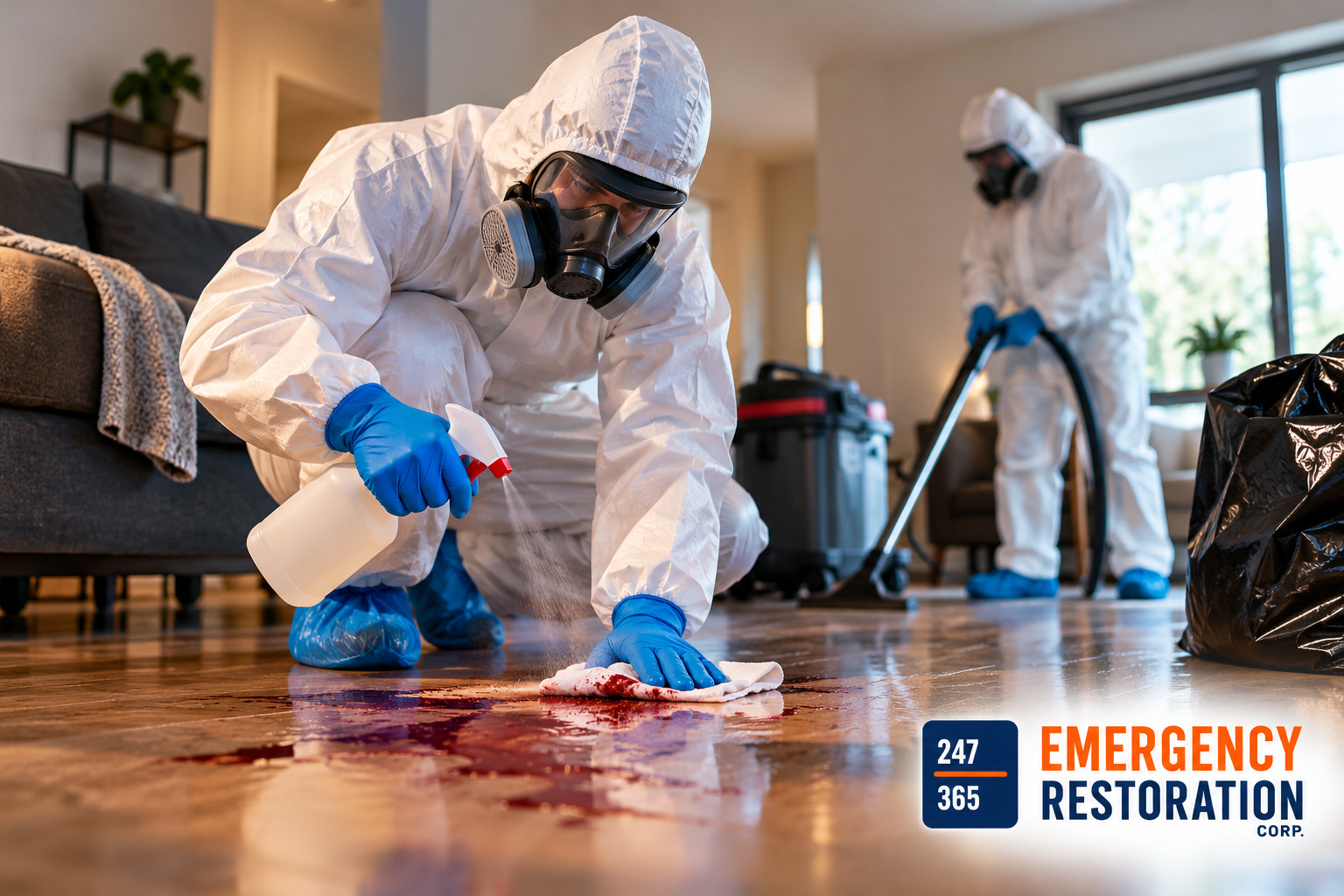
Crime scenes can leave behind more than visible damage. Blood, bodily fluids, and other biological materials may contaminate floors, walls, furniture, and personal belongings, creating serious health risks if they are not handled correctly. Although cleaning the affected area yourself may seem like a practical way to save money or restore the property quickly, crime scene cleanup requires specialized training, appropriate protective equipment, and professional decontamination procedures.
For families, property owners, landlords, and business operators, dealing with the aftermath of a traumatic incident can be emotionally overwhelming. Attempting to clean the scene without professional assistance may expose people to dangerous pathogens, cause further contamination, and create additional stress during an already difficult time.
Professional crime scene cleanup services help restore affected properties while prioritizing safety, privacy, and proper waste handling. Understanding the risks of do-it-yourself cleanup can help you make an informed decision and protect everyone who may enter the property.
One of the most important reasons to avoid cleaning a crime scene yourself is the risk of exposure to bloodborne pathogens. Blood and certain bodily fluids may contain infectious microorganisms that can cause serious illnesses.
Potential hazards include hepatitis B, hepatitis C, and human immunodeficiency virus (HIV). The likelihood of transmission varies depending on the pathogen and the type of exposure, but contact with contaminated materials should always be treated seriously.
Ordinary household cleaning practices may not provide adequate protection. Bare hands, small cuts, splashes, and accidental contact with contaminated objects can create exposure risks. Contamination may also remain in porous materials, including carpets, upholstered furniture, and unfinished wood.
Professional crime scene cleanup technicians are trained to recognize potential biohazards and follow appropriate precautions. They use suitable protective equipment and established procedures to reduce exposure risks during cleaning and disinfection.
Many people assume that household disinfectants, bleach, or general-purpose cleaners can completely sanitize a crime scene. However, effective decontamination requires more than removing visible stains.
Blood and bodily fluids can enter cracks, seams, flooring joints, and other difficult-to-reach areas. Contaminated materials may also remain beneath carpets, baseboards, or furniture. Simply wiping a surface can leave biological residue behind.
Disinfectants must be appropriate for the intended use and applied according to their product labels, including the required contact time. Some products may damage surfaces without effectively addressing every contamination concern.
Professional cleanup specialists assess the affected area, determine which materials can be cleaned, and identify items that may require removal. They use suitable cleaning and disinfection methods to address contamination while minimizing the risk of spreading it to unaffected areas.
Cleaning a crime scene without proper training can unintentionally spread contamination throughout a property.
For example, using the same cloth, mop, gloves, or cleaning equipment in multiple rooms can transfer biological material from one surface to another. Walking through an affected area and then entering a hallway or another room may also spread contaminants.
Improper handling of clothing, furniture, and cleaning supplies can create additional exposure points. Even waste disposal can become a problem if contaminated materials are placed in ordinary household garbage when specialized handling is required.
Professional technicians follow controlled cleaning procedures designed to limit cross-contamination. Depending on the situation, they may establish a work area, separate clean and contaminated equipment, use appropriate containment measures, and carefully manage materials during removal.
These precautions help prevent contamination from spreading beyond the original scene.
Crime scene cleanup can generate contaminated materials such as absorbent cloths, disposable protective equipment, damaged carpet, and other items that cannot safely be returned to normal use.
Placing these materials in ordinary garbage without assessing applicable requirements can expose waste handlers, occupants, and others to unnecessary risks. Certain waste may require specific packaging, transportation, and disposal arrangements under local regulations.
Professional crime scene cleanup companies understand that waste management is an essential part of the restoration process. They assess contaminated items and arrange appropriate handling and disposal in accordance with applicable requirements.
This helps property owners avoid unsafe disposal practices and supports a more responsible cleanup process.
Not every contaminated surface can be restored through routine cleaning. Materials such as mattresses, carpets, upholstered furniture, insulation, and some types of flooring may absorb biological fluids beyond the visible surface.
When contamination penetrates these materials, surface cleaning alone may not be sufficient. The appropriate response depends on the extent of contamination, the material involved, and whether safe restoration is feasible.
Attempting to save heavily contaminated belongings without a proper assessment can leave hidden contamination behind. Conversely, discarding every affected item without evaluating it may create unnecessary costs.
Professional technicians assess the condition of affected materials and determine whether cleaning, specialized treatment, or removal is appropriate. Their goal is to address the contamination safely while identifying opportunities to preserve materials when possible.
The aftermath of a violent incident or unexpected death can be deeply distressing. Family members, friends, property owners, and employees may already be coping with grief, shock, anxiety, or uncertainty.
Personally cleaning an area associated with a traumatic event can intensify emotional distress. Seeing reminders of the incident while handling contaminated belongings may make it more difficult to process what happened.
Hiring a professional cleanup company allows affected individuals to focus on their emotional well-being, family responsibilities, and other important arrangements.
Professional teams also understand the importance of discretion and respectful communication. Choosing an experienced provider can help reduce the practical burden while treating the situation with sensitivity.
Attempting to clean a crime scene yourself may appear less expensive than hiring professionals. However, the initial savings can be outweighed by the cost of unsuitable cleaning supplies, damaged belongings, incomplete decontamination, or the need for professional treatment afterward.
Property owners may also overlook hidden contamination that becomes apparent during later repairs. Addressing the problem twice can increase restoration costs and delay the safe return of the property to normal use.
Professional cleanup services provide an assessment of the affected area and explain the work that may be required. Costs depend on factors such as the size of the affected space, the extent of contamination, the materials involved, accessibility, and disposal requirements.
Before authorizing work, request a written estimate and clarify which cleaning, removal, disinfection, and restoration services are included.
Professional crime scene cleanup involves more than removing visible evidence of an incident. It requires a systematic approach to identifying hazards, protecting workers and occupants, cleaning affected surfaces, and managing contaminated materials.
Depending on the situation, a professional service may include:
Assessment of the affected area and potential biohazards.
Appropriate personal protective equipment and work practices.
Removal of contaminated materials when necessary.
Cleaning and disinfection using suitable products and procedures.
Proper handling and disposal of biohazardous waste.
Evaluation of affected porous materials and structural surfaces.
Final inspection and recommendations for any additional restoration.
A qualified company should be able to explain its procedures, insurance coverage, relevant training, and approach to waste disposal. Ask about experience with similar incidents and whether additional restoration work may be necessary.
If law enforcement is investigating the incident, do not enter or clean the scene until authorities confirm that it has been released. Professional cleanup should begin only when it is legally and practically appropriate.
Taking a few simple precautions can help protect people and prevent further contamination.
First, keep children, pets, and other occupants away from the affected area. Do not touch blood, bodily fluids, or potentially contaminated objects. Avoid sweeping, vacuuming, wiping surfaces, or moving furniture, as these activities may spread contamination.
If authorities are involved, follow their instructions and wait for authorization before arranging cleanup. When contacting a professional company, explain the general nature of the contamination, the approximate size of the affected area, and any urgent property concerns.
You can also ask about response times, protective measures, waste disposal, estimated costs, and documentation. Avoid sharing unnecessary sensitive details, and choose a provider that treats your privacy respectfully.
DIY cleanup can expose you to bloodborne pathogens, spread contamination, and leave hidden biological material behind. Professional technicians use appropriate protective equipment and specialized procedures to address these risks.
Not necessarily. Effectiveness depends on the product, the contaminated material, the application method, and the required contact time. Some contamination may also penetrate porous materials and require specialized treatment or removal.
Cleanup should begin after law enforcement or other relevant authorities have released the scene, when applicable. Once authorization is provided, contacting a qualified cleanup company promptly can help prevent unnecessary delays.
Depending on the contamination, carpets, mattresses, upholstery, insulation, or other porous materials may require removal. A professional assessment helps determine whether affected items can be safely restored.
Coverage depends on the policy, the cause of the damage, exclusions, and the insurer's requirements. Contact your insurance provider before authorizing non-emergency work, and keep estimates, invoices, and relevant documentation.
50+ Restoration, Environmental, Inspection & Property Maintenance Services – 24/7 Across Southern Ontario