- Available 24/7 — 365 Days a Year
- Toronto & All GTA — Southern Ontario
- IICRC Certified · Insurance Approved
- Residential & Commercial Services
CALL NOW
(416) 657-2222
(416) 657-2222
Sewage Backup Cleanup vs. Water Damage Restoration: What’s the Difference?
When it comes to sewage backups, what isn’t immediately visible can cause serious property damage and health risks. Sewage water contains hazardous bacteria and contaminants that can quickly spread through furnace rooms, basements, and surrounding structures if not addressed promptly.
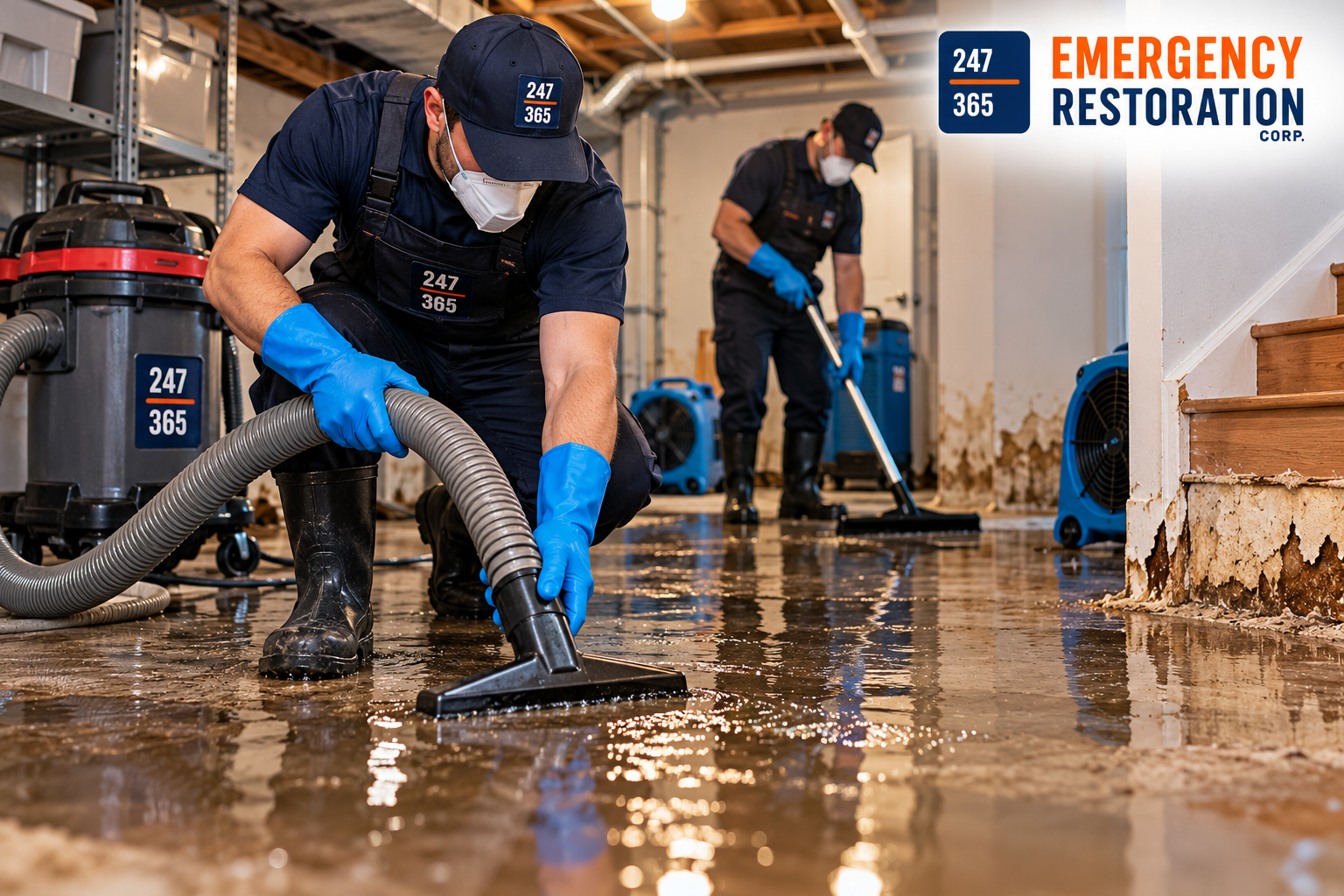
Water damage can cause serious problems for homeowners and businesses, from damaged flooring and drywall to mould growth and costly structural repairs. However, not all water damage incidents are the same. A burst pipe, an overflowing bathtub, and a sewage backup may all leave a property wet, but each situation requires a different cleanup and restoration approach.
Understanding the difference between sewage backup cleanup and water damage restoration helps property owners choose the appropriate professional services, protect their health, and prevent further damage. While both services involve removing water and restoring affected areas, sewage cleanup requires additional precautions because contaminated wastewater can contain harmful microorganisms and hazardous materials.
What Is Sewage Backup Cleanup?
What Is Water Damage Restoration?
Key Differences Between Sewage Cleanup and Water Damage Restoration
Health Risks Associated With Sewage Backups
The Professional Sewage Cleanup Process
The Water Damage Restoration Process
Why Professional Cleanup Is Important
How to Prevent Future Water Damage
Frequently Asked Questions
Sewage backup cleanup is a specialized service designed to remove wastewater and contaminated materials from a property after sewage flows back through drains, toilets, floor drains, or plumbing systems.
Sewage backups can occur because of blocked sewer lines, tree root intrusion, damaged pipes, excessive rainfall, municipal sewer problems, or overwhelmed drainage systems. When wastewater enters a basement, bathroom, or other indoor space, it can contaminate floors, walls, furniture, and personal belongings.
Unlike clean water from a leaking supply pipe, sewage may contain bacteria, viruses, parasites, and other harmful contaminants. This makes the cleanup process more complex and potentially hazardous.
Professional sewage backup cleanup typically includes:
Assessing the extent of contamination.
Establishing appropriate safety precautions and containment.
Removing sewage and contaminated standing water.
Disposing of unsalvageable materials safely.
Cleaning and disinfecting affected surfaces.
Drying the property and monitoring moisture levels.
Checking for hidden contamination and moisture damage.
Because contaminated materials can pose health risks, property owners should avoid direct contact with sewage and leave hazardous cleanup to trained professionals.
Water damage restoration focuses on repairing and recovering a property affected by unwanted water. Common causes include burst pipes, appliance leaks, roof leaks, overflowing sinks, stormwater intrusion, and certain types of flooding.
The restoration process depends on the source of the water, the amount of moisture present, and how long materials have remained wet.
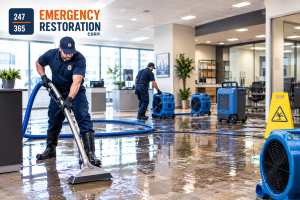
Water damage restoration generally involves water extraction, moisture detection, structural drying, cleaning, and repairs. Technicians may use commercial dehumidifiers, air movers, moisture meters, and specialized extraction equipment to remove water and reduce the risk of secondary damage.
The main objectives are to:
Remove standing water quickly.
Dry affected building materials.
Protect salvageable belongings.
Prevent or address mould growth.
Repair damaged floors, walls, and other components.
Restore the property to a safe, usable condition.
Not every water damage incident involves contaminated water. However, the source must be assessed carefully because floodwater and other water sources may contain sewage, chemicals, or other pollutants.
Although these services share some restoration techniques, several important differences determine how the work should be performed.
The most significant difference is the type of water involved. Sewage backup cleanup deals with wastewater that may contain harmful biological contaminants. Standard water damage restoration may involve water from a clean supply line or another source with a different contamination level.
Water from rivers, storms, or overflowing sewers must not automatically be considered clean.
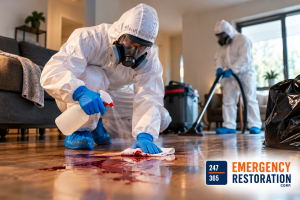
Sewage cleanup requires strict precautions to reduce exposure to biological hazards. Depending on the incident, workers may need specialized protective clothing, respiratory protection, controlled work areas, and procedures for handling contaminated waste.
Water restoration also requires safety precautions, especially when electrical hazards, damaged structures, or contaminated water are present. The necessary protection depends on the specific conditions.
Sewage-contaminated surfaces require appropriate cleaning and disinfection after contaminated water and debris have been removed. Porous materials that cannot be adequately cleaned may need to be discarded.
For clean-water incidents, the primary focus is often water extraction and thorough drying, followed by cleaning and repairs as necessary.
Sewage can penetrate carpets, insulation, drywall, upholstery, and other porous materials. Some items may be impossible to decontaminate reliably and may require removal and proper disposal.
In a clean-water incident, certain materials may be salvageable if restoration begins promptly and the materials can be dried safely.
Sewage backup cleanup may cost more than a straightforward clean-water restoration project because it can require additional protective equipment, specialized labour, disinfection, contaminated material removal, and regulated waste handling where applicable.
Actual costs depend on the affected area, contamination severity, accessibility, materials involved, and required repairs.
Sewage backups should be treated seriously because exposure can occur through direct contact, contaminated surfaces, or accidental ingestion. Depending on the contamination, wastewater may contain microorganisms capable of causing illness.
Potential concerns include gastrointestinal infections, skin irritation, and exposure to other harmful contaminants. People with certain medical vulnerabilities may face additional risks.
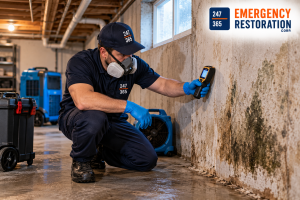
Sewage can also leave persistent unpleasant odours and contaminate household belongings. If moisture remains trapped in walls, flooring, or insulation, mould may develop and create additional indoor environmental concerns.
If sewage enters your property:
Keep children and pets away from affected areas.
Avoid touching contaminated water or materials.
Do not enter standing water where electrical hazards may exist.
Avoid using household fans that could spread contaminated droplets or particles.
Contact a qualified sewage cleanup professional.
If anyone develops symptoms after suspected exposure, seek appropriate medical advice.
A professional sewage cleanup project typically follows several stages.
Step 1: Inspection and safety assessment. Technicians identify the source, affected areas, contamination risks, and potential hazards.
Step 2: Water and sewage removal. Specialized extraction equipment removes contaminated wastewater while workers follow appropriate containment and handling procedures.
Step 3: Removal of contaminated materials. Materials that cannot be reliably cleaned, disinfected, and restored are removed and disposed of appropriately.
Step 4: Cleaning and disinfection. Remaining suitable surfaces are cleaned and treated with products appropriate for the materials and contamination involved.
Step 5: Structural drying. Professional drying equipment helps remove residual moisture from affected building materials.
Step 6: Restoration and repairs. Damaged drywall, flooring, insulation, and other components are repaired or replaced as needed. The property should be evaluated to confirm that cleanup and drying goals have been achieved.
The exact process varies depending on the source and severity of the backup.
Water damage restoration also follows a structured process, but the specific steps depend on the water source and contamination category.
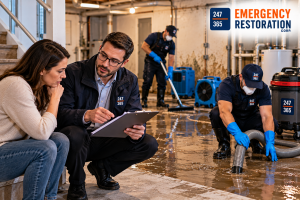
First, technicians inspect the property and identify the source of the water. Any ongoing leak or plumbing problem should be addressed before restoration proceeds.
Next, standing water is extracted using suitable pumps and vacuums. Technicians then use moisture meters and other equipment to identify wet materials and monitor drying.
Air movers and dehumidifiers help remove moisture from affected areas. Damaged materials may be cleaned, repaired, or replaced according to their condition and contamination level.
Finally, the restoration team evaluates the affected areas, completes necessary repairs, and checks that drying objectives have been met.
Prompt action is important because prolonged moisture can increase the likelihood of mould growth, material deterioration, and more extensive repairs.
Attempting to clean up significant water damage or a sewage backup without appropriate equipment and protective measures can expose occupants to hazards and leave hidden contamination behind.
Professional restoration teams have access to specialized extraction equipment, moisture detection tools, suitable cleaning and disinfection products, and established safety procedures. They can also identify damage that may not be visible on the surface.
Professional assistance is particularly important when sewage is involved, contamination affects porous building materials, water has spread into wall cavities, or the property has extensive damage.
Property owners should also document the damage and contact their insurance provider promptly. Coverage varies by policy, and sewage backup or flood damage may require specific endorsements or exclusions to be considered.
Preventive maintenance can reduce the likelihood of both sewage backups and other water damage incidents.
Consider these practical measures:
Arrange regular plumbing inspections and repair leaks promptly.
Avoid flushing wipes, grease, and other materials that can obstruct drains.
Have sewer lines inspected if recurring blockages occur.
Keep gutters and drainage systems clear.
Inspect basement walls and foundations for signs of water intrusion.
Consider a professionally installed and maintained backwater valve where appropriate.
Install suitable leak detectors near water heaters, washing machines, and other vulnerable appliances.
Understand your insurance policy’s coverage for sewer backup and flooding.
Prevention cannot eliminate every risk, but it can reduce the likelihood and severity of costly property damage.
Sewage cleanup removes contaminated wastewater and disinfects affected areas, while water damage restoration focuses on water extraction, structural drying, cleaning, and repairing damaged materials.
Professional cleanup is recommended because sewage may contain harmful bacteria, viruses, and other contaminants. Trained technicians use appropriate protective equipment and specialized cleaning procedures to reduce health risks.
Cleanup should begin as soon as it is safe. Prompt action helps limit contamination, prevent further property damage, and reduce the risk of mould growth.
Water damage restoration may include identifying moisture-related mould problems. If mould is present, additional remediation may be necessary depending on the extent of the growth and the affected materials.
Sewage cleanup can cost more because it may require specialized protective equipment, disinfection, contaminated material removal, and proper waste disposal. Costs depend on the severity and size of the damage.
50+ Restoration, Environmental, Inspection & Property Maintenance Services – 24/7 Across Southern Ontario