
- Available 24/7 — 365 Days a Year
- Toronto & All GTA — Southern Ontario
- IICRC Certified · Insurance Approved
- Residential & Commercial Services

CALL NOW
(416) 657-2222

(416) 657-2222
Why Does Your Basement Smell Musty? Hidden Moisture May Be the Cause
Black mould, scientifically known as Stachybotrys chartarum, thrives in humid or water-damaged environments such as basements, bathrooms, and behind walls. Once it grows, it releases toxic spores that spread through the air and cause serious health issues,
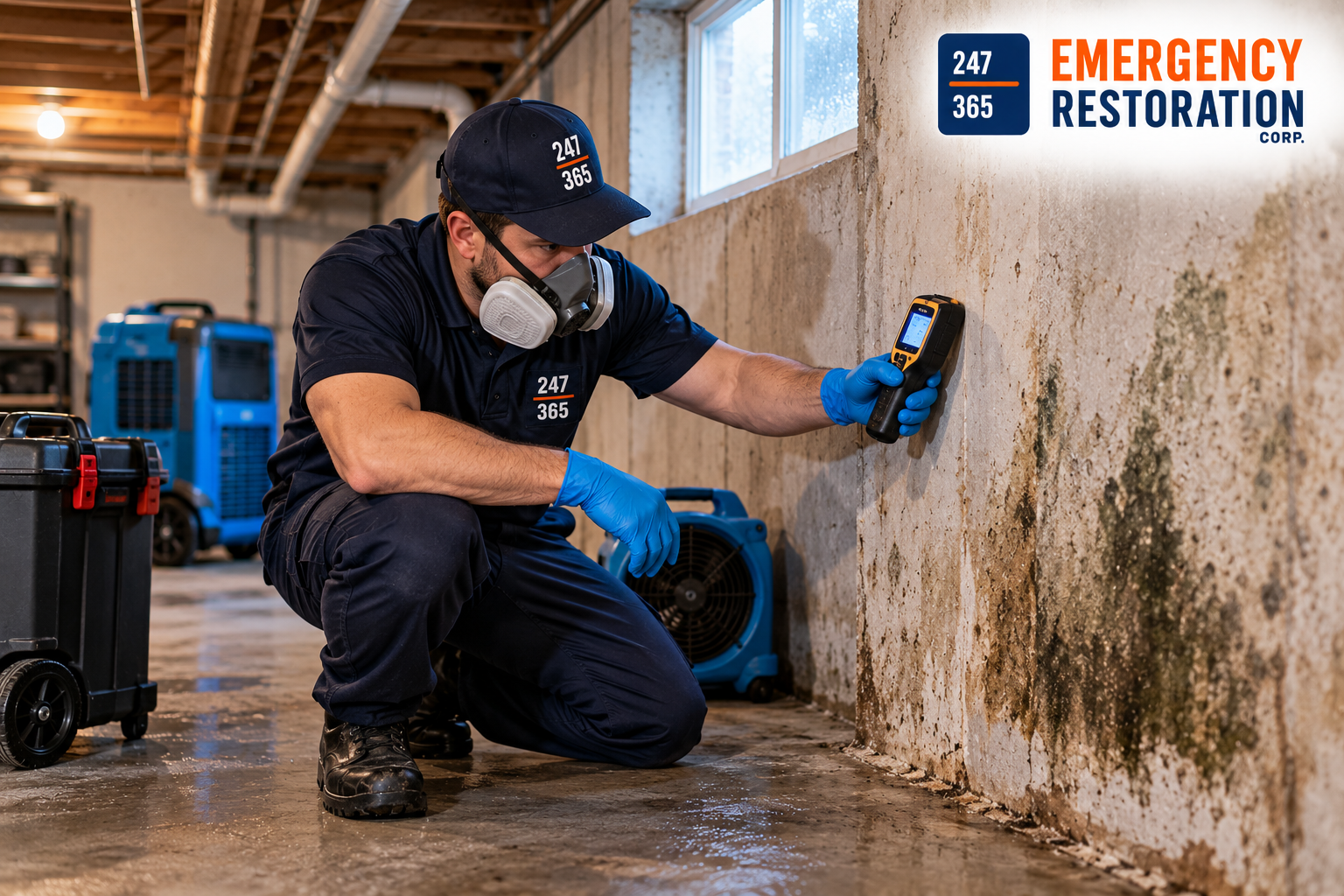
A musty basement smell can be more than an unpleasant odour. It may indicate excess moisture, hidden water damage, poor ventilation, or mould growth inside your home. Even when your basement looks clean and dry, moisture can accumulate behind walls, beneath flooring, and around the foundation without obvious signs.
Basements are particularly vulnerable to moisture because they are partially or completely below ground level. Rainwater, plumbing leaks, foundation cracks, condensation, and high humidity can all contribute to persistent dampness. When these conditions remain unresolved, they can affect building materials, create unpleasant indoor conditions, and increase the risk of mould growth.
Understanding the causes of a musty basement smell is the first step toward finding a lasting solution. By identifying the source of moisture and addressing the underlying problem, homeowners can protect their property and avoid more extensive restoration work.
Several issues can cause a basement to develop a persistent musty odour. Identifying the correct source is important because simply masking the smell will not solve the underlying problem.
Moisture can accumulate in places that are difficult to inspect, including behind drywall, beneath carpets, under laminate flooring, and inside insulation. A small plumbing leak or water intrusion through the foundation may go unnoticed for weeks or months.
As damp materials remain wet, they can develop unpleasant odours and create conditions favourable to mould growth. Homeowners may notice the smell becoming stronger after rainfall or when the basement remains closed for an extended period.
Professional moisture detection can help identify damp areas that are not visible during a routine inspection.
Basements often have higher humidity levels than upper floors because they receive less sunlight and may have limited ventilation. Warm, humid air can also condense on cool foundation walls, pipes, and concrete floors.
Over time, repeated condensation can leave surfaces damp and contribute to musty odours.
Using a dehumidifier, improving appropriate ventilation, and controlling sources of indoor moisture can help reduce humidity. However, these measures should be combined with an investigation into any underlying water intrusion.
Cracks in foundation walls, damaged window wells, poorly directed downspouts, and drainage problems can allow water to enter a basement.
Even a small amount of water entering repeatedly can cause dampness in concrete, drywall, wood framing, and stored belongings. Water intrusion may be more noticeable after heavy rain or snowmelt.
If the musty smell becomes stronger following wet weather, inspect accessible areas for water stains, peeling paint, damp corners, or white mineral deposits on masonry. Persistent or recurring water intrusion may require professional assessment and foundation or drainage repairs.
Mould can grow on materials that remain damp, including drywall, wood, cardboard, carpets, and some insulation products. Some mould growth may be visible as dark, greenish, or discoloured patches, while hidden growth can remain behind finished surfaces.
A musty odour can be one indication of a moisture problem associated with mould, but smell alone cannot confirm its presence or identify the type of mould.
Cleaning visible spots without correcting the moisture source may allow the problem to return. Effective mould remediation addresses the affected materials and the conditions that permitted growth.
Mould spores are naturally present in indoor and outdoor environments. When spores encounter suitable moisture and materials, they can begin to grow.
Basements can provide favourable conditions when water enters through foundation walls, plumbing leaks remain unrepaired, or humidity stays elevated for extended periods. Organic materials such as paper-faced drywall, wood, dust, and cardboard can support growth when damp.
Hidden mould may develop behind baseboards, inside wall cavities, beneath flooring, or around leaking pipes. In these situations, the visible surface may appear normal even though moisture is present underneath.
Persistent dampness can also damage building materials, weaken some finishes, and create lingering odours. Addressing water intrusion and drying affected materials promptly helps reduce the likelihood of these problems becoming more extensive.
A musty smell is not the only indication that your basement may have a moisture issue. Other warning signs include:
Water stains on walls, ceilings, or floors.
Peeling paint or bubbling wall finishes.
Condensation on windows, pipes, or cold surfaces.
Damp carpets, warped flooring, or swollen baseboards.
Visible mould or unexplained surface discolouration.
White, powdery mineral deposits on concrete or masonry.
Repeated puddles after rainfall.
Musty odours that return after cleaning.
These signs do not always indicate mould, but they suggest that the basement should be inspected for excess moisture and possible water damage.
If the odour persists despite routine cleaning, avoid assuming that an air freshener or surface cleaner will resolve the problem.
A musty smell that becomes stronger after rainfall may indicate water entering through the foundation or excessive moisture around the property.
Common causes include clogged gutters, downspouts that discharge water too close to the foundation, poor exterior grading, damaged window wells, and foundation cracks. Heavy rain can also overwhelm drainage systems and contribute to basement flooding.
Homeowners can start by checking that gutters are clear and downspouts direct water away from the foundation. However, recurring leaks, significant cracks, or water entering through basement walls may require professional evaluation.
It is also important to inspect the basement after snowmelt, since saturated soil and changing groundwater conditions can contribute to water intrusion.
Finding the source of moisture is essential to eliminating a musty basement smell permanently.
Start by checking accessible plumbing connections, appliances, water heaters, foundation walls, and window wells. Look for damp materials, water stains, condensation, and areas where the odour is strongest.
Pay attention to changes in the smell after rain, during humid weather, or when plumbing fixtures are used. These patterns may provide useful clues about the source.
For persistent problems, professional restoration technicians may use moisture meters, thermal imaging where appropriate, and other inspection methods to locate damp areas. These tools can help identify potential moisture pathways, although further inspection may be necessary to confirm the cause.
Avoid opening walls or removing potentially mould-contaminated materials without understanding the extent of the problem. Larger affected areas or contamination involving HVAC systems may require specialized assessment.
The most effective solution depends on the cause of the smell. Consider the following steps:
Use a suitable dehumidifier and monitor humidity levels. A relative humidity level around 30% to 50% is generally recommended for indoor spaces, provided it is appropriate for the building and climate.
Keep the equipment maintained and ensure condensate drains properly.
Repair leaking pipes, plumbing fixtures, and other sources of indoor water. If water is entering through the foundation, address drainage problems and seek appropriate repairs.
Removing moisture without fixing the source may provide only temporary relief.
Hard, nonporous surfaces may be suitable for cleaning, depending on the contamination. Porous materials that have sustained extensive mould growth or water damage may need specialized treatment or removal.
Use caution when dealing with extensive mould growth or contaminated materials, and avoid disturbing affected areas unnecessarily.
Maintain gutters and downspouts, correct drainage issues, and keep basement storage areas organized so that walls and floors can be inspected. Avoid storing cardboard boxes directly on damp floors.
Where necessary, professional drying equipment can help remove excess moisture from affected materials after water intrusion.
Professional assistance may be appropriate when a musty smell persists, returns after cleaning, or appears alongside visible water damage or suspected mould growth.
A restoration professional can assess moisture levels, investigate potential water intrusion, and recommend suitable cleaning, drying, or remediation measures.
Professional support is particularly important when water damage affects multiple rooms, moisture has penetrated wall cavities, mould growth covers a large area, or contaminated floodwater has entered the basement.
247-365 Emergency Restoration Corp. can be a point of contact for homeowners seeking information about moisture-related restoration services, subject to the company’s actual service offerings and coverage.
When requesting an assessment, explain when the odour started, whether it changes after rainfall, and whether you have noticed leaks, stains, or visible mould. This information can help guide the inspection.
A musty basement smell often signals an underlying moisture problem that deserves attention. Hidden leaks, foundation water intrusion, condensation, elevated humidity, and mould growth can all contribute to persistent odours.
Although dehumidifiers and routine cleaning may help in some situations, they will not provide a lasting solution if water continues to enter the basement or affected materials remain damp.
Identifying the source, correcting water intrusion, and properly drying or remediating affected materials can help protect your property and reduce recurring odours. If the smell persists or you notice signs of water damage or mould, consider a professional assessment to determine the safest and most effective next steps.
Moisture may be trapped behind walls, beneath flooring, inside insulation, or in other concealed areas. A professional moisture assessment can help locate hidden dampness.
No. High humidity, condensation, damp building materials, and other moisture-related conditions can also cause musty odours. However, persistent smells may warrant an inspection for hidden mould.
Persistent dampness and mould growth can affect indoor environmental conditions. People with asthma, allergies, or other respiratory sensitivities may be particularly affected by damp or mouldy environments.
Bleach is not a universal solution for mould or moisture problems. It does not correct the source of dampness, and it may be unsuitable for porous materials. Never mix bleach with other cleaning products.
Consider professional help if the smell persists, visible mould returns, water enters repeatedly, or building materials remain damp. Extensive contamination or hidden water damage may require specialized equipment and remediation procedures.
50+ Restoration, Environmental, Inspection & Property Maintenance Services – 24/7 Across Southern Ontario