- Available 24/7 — 365 Days a Year
- Toronto & All GTA — Southern Ontario
- IICRC Certified · Insurance Approved
- Residential & Commercial Services

CALL NOW
(416) 657-2222
(416) 657-2222
Does Home Insurance Cover Basement Sewage Backup Cleanup?
A sewage backup can cause serious health risks and major damage to your home. At 247-365.ca, we provide fast, professional sewage backup cleanup services to keep your family safe and your property clean.
Call Now : 416-657-2222
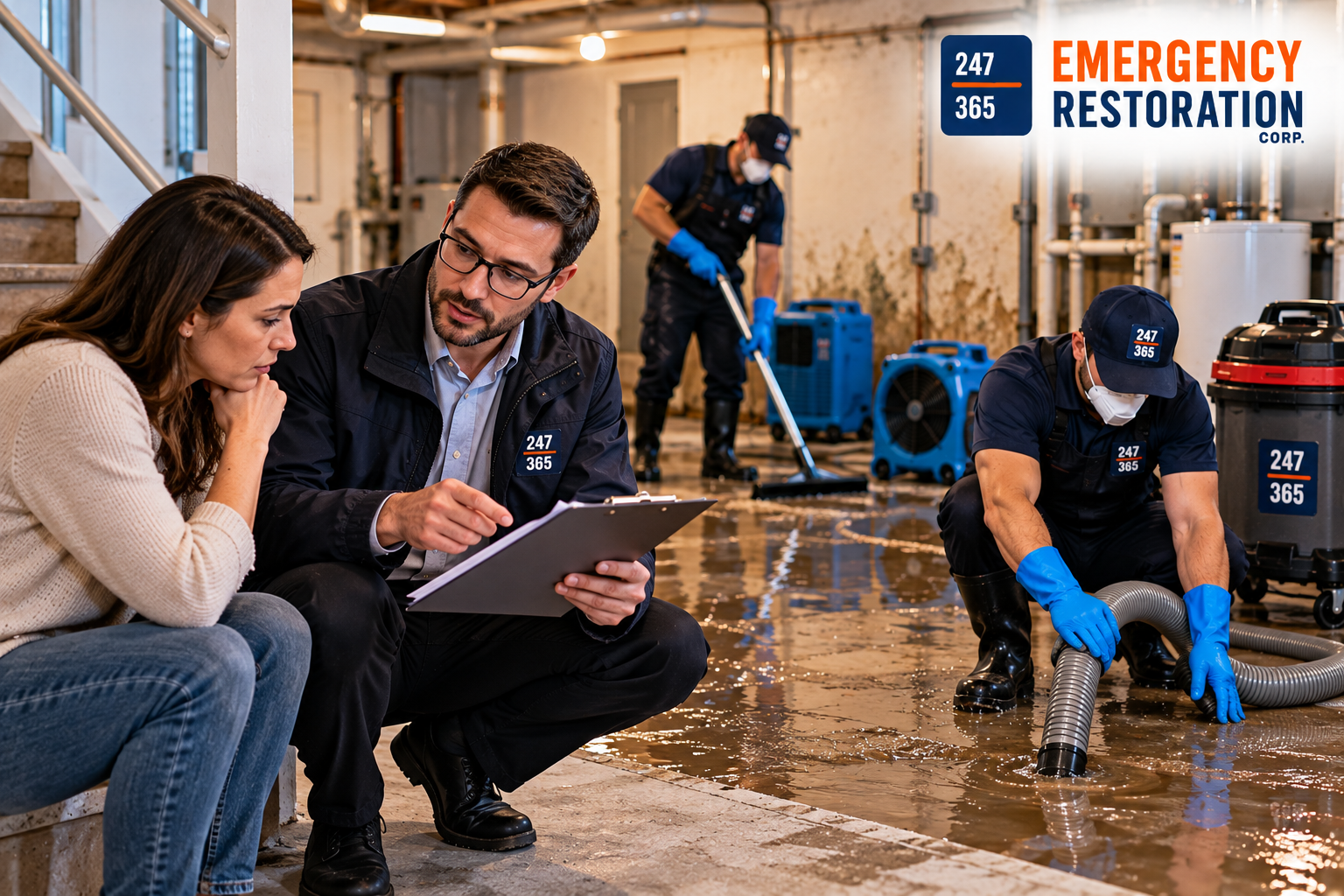
A sewage backup in your basement can cause extensive property damage, unpleasant odours, and serious sanitation concerns. Contaminated wastewater can spread across floors, soak into carpets and drywall, damage personal belongings, and create conditions that require professional cleanup and restoration. Along with managing the damage, homeowners often face an important financial question: does home insurance cover basement sewage backup cleanup?
In Canada, the answer depends on your insurance policy, the cause of the backup, and whether you have specific sewer backup coverage. Some homeowners policies include this protection, while others require an optional endorsement or additional coverage. Even when coverage applies, deductibles, coverage limits, and exclusions may affect how much your insurer pays.
Understanding your policy before an emergency occurs can help you prepare for unexpected expenses. If sewage enters your basement, taking appropriate safety precautions, documenting the damage, and contacting your insurer promptly can also help you manage the restoration process.
Standard home insurance does not automatically cover every type of basement flooding or sewage backup. Many Canadian homeowners need a sewer backup endorsement or another specific coverage option to protect against damage caused by wastewater entering the home through drains or sewer lines.
If your policy includes applicable coverage, it may help pay for eligible cleanup, repairs, and damaged belongings. However, the exact protection depends on the wording of your policy and the circumstances of the incident.
For example, a sewage backup caused by a blocked municipal sewer may be treated differently from water entering through foundation walls during heavy rainfall. Similarly, damage resulting from a sudden plumbing failure may be subject to different policy provisions than damage associated with ongoing maintenance problems.
Before assuming that a claim will be approved, review your insurance documents and speak with your insurance representative. Ask specifically whether your policy covers sewer backup, what limits apply, and whether professional sewage cleanup expenses are eligible.
Sewer backup coverage is designed to help protect homeowners against certain losses caused by wastewater backing up into their property. Depending on the policy, covered incidents may involve water entering through toilets, floor drains, sinks, or other connected drainage systems.
This protection can be especially important for homes with finished basements, laundry rooms, storage areas, or basement living spaces.
A sewage backup can damage several types of property, including:
Carpets, rugs, and upholstered furniture.
Drywall, baseboards, and flooring.
Stored personal belongings and household items.
Insulation and other affected building materials.
Certain appliances or equipment located in the basement.
The extent of coverage varies between policies. Some policies may have separate limits for building damage, personal property, cleanup expenses, or additional living costs.
Homeowners should also confirm the deductible and ask whether the policy covers the full restoration process or only specific categories of loss.
When a sewage backup incident falls within the terms of a policy, insurance may help pay for several necessary expenses.
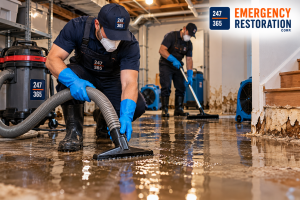
Professional sewage cleanup may involve extracting contaminated wastewater, cleaning affected surfaces, disinfecting appropriate materials, and managing contaminated waste.
Depending on the policy, eligible expenses may be covered when they are necessary to address an insured loss. Homeowners should keep invoices and ask their insurer whether a restoration company’s estimate needs approval before work begins.
Sewage water can penetrate drywall, insulation, flooring, and other building materials. Some items may be cleaned, while heavily contaminated porous materials may need removal and replacement.
Insurance may cover eligible repairs when the damage results from a covered event, subject to policy limits and exclusions.
Furniture, clothing, electronics, stored documents, and other belongings may be damaged during a basement sewage backup. Personal property coverage may help with eligible losses, depending on the policy.
Document damaged items with photographs and create an inventory when it is safe to do so. Keep receipts or other proof of ownership if available.
Depending on the circumstances and policy wording, coverage may extend to certain drying, repairs, or additional living expenses if the home becomes temporarily uninhabitable because of an insured loss.
Do not assume every expense is covered. Confirm the applicable limits and requirements with your insurer.
Even when sewer backup coverage is available, certain situations may be excluded or restricted.
Common concerns include:
Damage caused by ongoing leaks or neglected maintenance.
Pre-existing damage that developed gradually.
Flooding from surface water or groundwater when separate coverage is required.
Expenses exceeding the applicable policy limit.
Losses excluded by specific policy wording.
Damage that does not meet the policy’s definition of an insured event.
These are general examples rather than universal exclusions. The exact terms vary by insurer and policy.
For instance, a homeowner may have sewer backup coverage but not the separate overland water protection needed for certain types of flooding. Because water can enter a basement through different pathways, identifying the source is essential when determining which coverage may apply.
The cost of basement sewage backup cleanup depends on the size of the affected area, the volume of wastewater, contamination severity, the materials involved, and the extent of structural damage.
A small incident affecting a limited area may require less work than a major backup involving a finished basement, multiple rooms, or extensive contaminated materials.
Professional restoration expenses may include:
Initial assessment and safety precautions.
Contaminated water extraction.
Cleaning and disinfection.
Removal and disposal of affected materials.
Structural drying and moisture monitoring.
Repairs and replacement of damaged finishes.
The final cost may also depend on accessibility, equipment requirements, and how long the wastewater remained inside the property.
Request a written estimate that clearly describes the proposed work. If you are filing an insurance claim, ask your insurer which documentation is needed and whether estimates must be approved before non-emergency restoration begins.
Taking the right steps after a sewage backup can help protect your household and reduce additional property damage.
Keep children and pets away from the affected area. Sewage water may contain harmful microorganisms and other contaminants.
Do not enter standing water if electrical outlets, appliances, or wiring may be affected. Contact qualified professionals to address electrical hazards before entering the area.
Notify your insurer as soon as possible and explain what happened, where the sewage entered, and how much of the basement appears affected.
Ask whether your policy includes sewer backup coverage and whether a claims adjuster needs to inspect the property.
When it is safe, take photographs and videos of the affected rooms, water levels, damaged materials, and personal belongings. Keep a record of the incident, cleanup expenses, and communications with your insurer.
Avoid discarding damaged belongings before documenting them unless immediate removal is necessary for safety or sanitation. Follow your insurer’s instructions where possible.
Sewage backup cleanup requires more than removing visible water. Contaminated materials must be assessed, affected surfaces cleaned appropriately, and moisture addressed to help prevent further damage.
Contact a qualified restoration company with experience handling sewage contamination. Prompt mitigation may help limit additional damage, but coordinate with your insurer as soon as practical.
Save estimates, invoices, receipts, inspection reports, photographs, and claim correspondence. Organized documentation can help support the claim review process and clarify the work completed.
Filing a claim typically begins with notifying your insurance provider and providing details about the incident. Your insurer may assign an adjuster to assess the damage, review the cause, and determine how the policy applies.
Prepare the following information where available:
The date and approximate time of the backup.
The suspected cause of the incident.
Photographs and videos of the damage.
An inventory of damaged belongings.
Cleanup estimates and restoration invoices.
Relevant maintenance or repair records.
Ask the insurer about the deductible, coverage limit, documentation requirements, and approval process. If immediate cleanup is necessary to protect health and prevent further damage, explain the urgency and keep records of the work performed.
A restoration company may be able to provide photographs, moisture readings, itemized estimates, and other documentation to support the restoration process. However, the insurer makes the coverage decision according to the policy.
Sewage backup cleanup requires appropriate protective equipment, safe handling procedures, and methods suited to contaminated water. Attempting to clean a significant sewage spill using ordinary household equipment can expose occupants to harmful contaminants and spread contamination to other areas.
Professional restoration technicians can assess the affected materials, remove contaminated water, clean and disinfect suitable surfaces, and determine whether damaged porous materials require removal. They can also use specialized drying equipment when necessary.
247-365 Emergency Restoration Corp. can be presented as a contact point for homeowners seeking information about emergency restoration and sewage cleanup services, subject to the company’s actual service availability and coverage.
When choosing a provider, ask about experience with sewage backups, the proposed cleanup process, waste disposal, estimated costs, and documentation for insurance purposes.
Home insurance may cover basement sewage backup cleanup, but coverage is not guaranteed. In Canada, protection often depends on whether your policy includes sewer backup coverage, the cause of the damage, applicable exclusions, and the limits and deductibles specified in your contract.
Reviewing your policy before an emergency can help you understand your protection and identify gaps. If sewage backs up into your basement, prioritize safety, contact your insurer, document the damage, and arrange appropriate professional cleanup.
Acting promptly can help limit further property damage and support a more organized recovery process.
Not necessarily. Many policies require sewer backup coverage to be included or purchased as an endorsement. Review your policy and confirm coverage with your insurer.
Coverage varies by insurer and policy. Some policies offer it as an optional endorsement, while others may include it under specific terms. Check your policy documents for details.
Eligible cleanup costs may be covered if the sewage backup is an insured event. Deductibles, coverage limits, exclusions, and documentation requirements can affect reimbursement.
Keep people and pets away from contaminated water, avoid potential electrical hazards, notify your insurer, document the damage when safe, and contact a qualified sewage cleanup professional.
It may cover eligible damaged belongings and building materials, depending on your policy. Document the damage and ask your insurer how to handle contaminated items.
50+ Restoration, Environmental, Inspection & Property Maintenance Services – 24/7 Across Southern Ontario