
- Available 24/7 — 365 Days a Year
- Toronto & All GTA — Southern Ontario
- IICRC Certified · Insurance Approved
- Residential & Commercial Services

CALL NOW
(416) 657-2222

(416) 657-2222
Is mould hiding in your walls? You might not see it, but it could be putting your health at risk. At 247-365.ca, we offer professional mould inspections—available 24/7, 365 days a year.
For More Information:
Learn more : https;//247-365.ca/
Call us : 416-657-2222
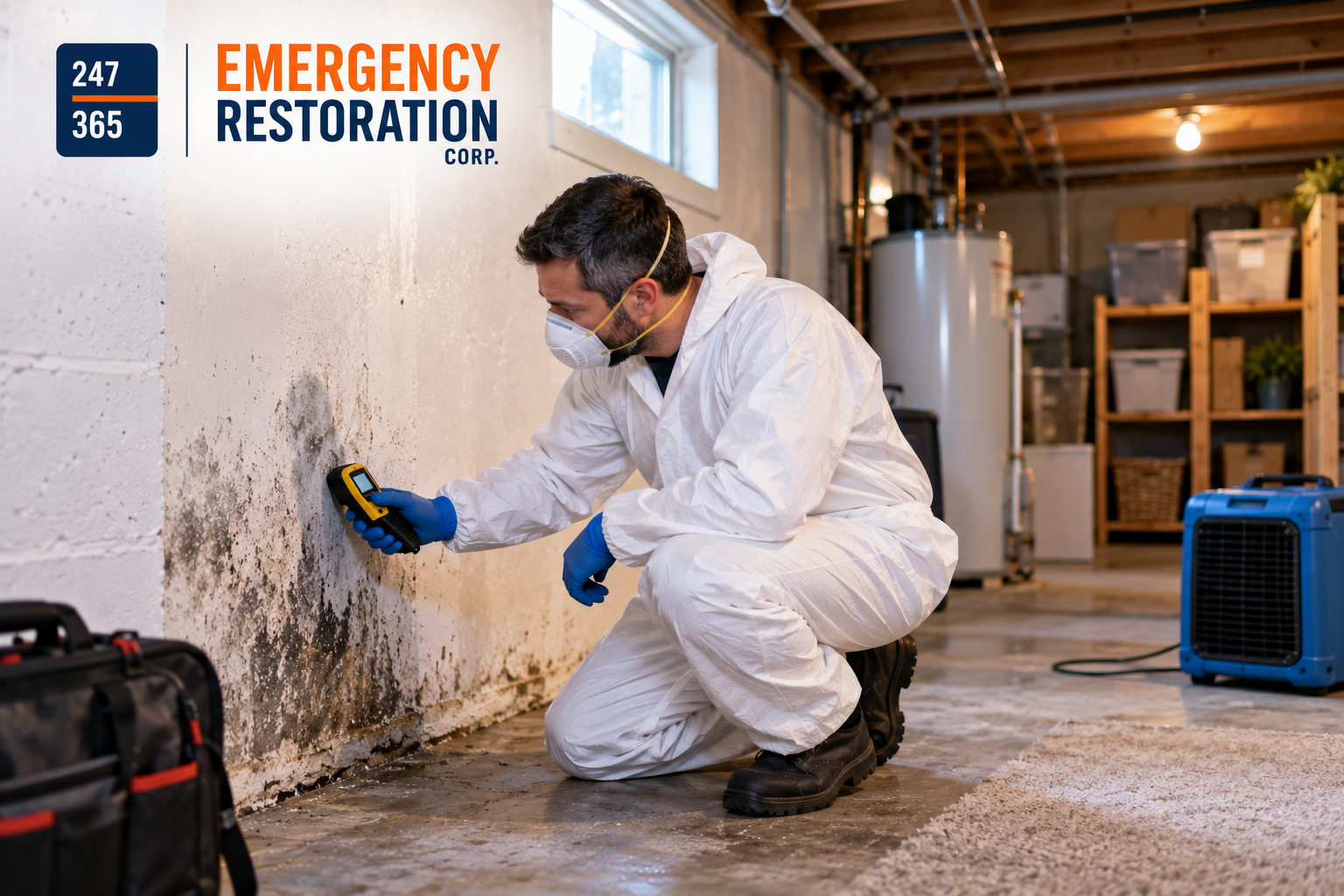
A musty smell in your home can be more than an unpleasant odour. If the smell keeps coming back after cleaning, air freshening, or opening windows, there may be an underlying moisture problem that has not been properly addressed.
Musty odours are especially common in basements, crawl spaces, bathrooms, laundry areas, and other places where humidity can build up. Understanding why the smell returns is the first step toward finding a lasting solution.
A musty smell is often associated with moisture, mould, poor ventilation, or damp building materials. When an area remains damp for an extended period, microorganisms can grow and produce compounds that contribute to unpleasant odours.
Common causes include:
The important point is that the smell itself is usually a symptom rather than the actual problem.
If you simply cover the odour with an air freshener, it may disappear temporarily but return once the underlying conditions remain.
If you have cleaned your basement or another area several times and the musty smell keeps coming back, there may still be a source of moisture present.
For example, a basement wall may look dry on the surface while moisture remains inside the wall or behind insulation. Similarly, a carpet may appear clean while its padding underneath remains damp.
Another possibility is that mould or other moisture-related contamination was not completely addressed.
This is why identifying the source is generally more effective than repeatedly treating the smell itself.
One of the most common reasons for a recurring musty odour is hidden moisture.
Water can enter a home in several ways without creating an obvious puddle. Small plumbing leaks, foundation seepage, condensation, roof leaks, and drainage problems can introduce moisture into walls, floors, ceilings, and other materials.
In a basement, moisture may come from:
If the moisture source is not corrected, the musty odour may continue to return even after professional or DIY cleaning.
Mould is another common reason for a persistent musty basement smell.
Mould can grow on or inside materials when sufficient moisture is present. Depending on where it develops, it may not always be immediately visible.
You may notice a musty smell before you see obvious mould growth.
Look for signs such as:
If you suspect mould, don’t assume that simply wiping a visible area will solve the problem. The moisture source needs to be identified and addressed as well.
Regular household cleaning can remove dirt and surface residue, but it may not eliminate the source of a persistent odour.
For example, cleaning a basement floor will not necessarily resolve moisture trapped beneath the flooring. Similarly, spraying an odour-neutralizing product on a wall will not solve a leak behind that wall.
Porous materials can also absorb moisture and odours.
Materials that may be affected include:
If these materials have experienced prolonged moisture exposure, they may require specialized assessment, drying, cleaning, or replacement depending on the situation.
Yes. Water damage and musty smells often go together.
After a flood, plumbing leak, sewage backup, or other water event, materials can remain damp long after visible water has disappeared.
If affected areas are not dried properly, moisture can become trapped in hidden spaces. Over time, this can contribute to persistent odours and potentially mould growth.
This is why professional water damage restoration often includes moisture detection and structural drying rather than simply removing visible water.
Even when there isn’t a major leak, poor ventilation can contribute to a recurring musty smell.
Areas such as basements and bathrooms may naturally have higher humidity. Without adequate air circulation, moisture can remain in the environment for longer periods.
Improving ventilation may help reduce excess humidity, but it should not be considered a replacement for repairing a leak or addressing existing water damage.
A dehumidifier can also be useful in damp areas by helping control indoor humidity.
The best way to eliminate a recurring musty odour is to identify and address its source.
Inspect areas where water may be entering or accumulating. Check around plumbing fixtures, windows, foundation walls, ceilings, and flooring.
High humidity can contribute to damp conditions. A simple hygrometer can help you monitor indoor humidity.
Look for stains, warped materials, peeling paint, damaged drywall, or other signs of previous moisture exposure.
If you notice visible mould or a persistent odour without an obvious source, consider having the area professionally assessed.
Proper drying is essential after water damage. Depending on the situation, professional equipment may be required to remove moisture from building materials.
Repair leaks, improve drainage, control humidity, and resolve other moisture sources. Otherwise, the smell may return.
A professional assessment may be appropriate when the source of the smell isn’t obvious or when there has been significant water damage.
Consider contacting a restoration professional if:
Professionals can use moisture detection equipment to identify areas that may not be visibly wet. Depending on the situation, restoration may involve water removal, structural drying, cleaning, mould remediation, or replacement of severely affected materials.
Once the source has been addressed, prevention is important.
Homeowners can help reduce recurring musty odours by:
Regular inspection can help you discover moisture problems before they become larger restoration issues.
A recurring musty smell is often caused by an unresolved moisture problem. Hidden water leaks, high humidity, condensation, mould growth, or damp building materials can continue producing odours even after the area has been cleaned.
Not necessarily. A musty odour can be associated with mould, but it can also come from excessive humidity, damp materials, poor ventilation, or previous water damage. If the smell persists, identifying the source is important.
Basements are naturally more prone to moisture because they are below ground level. Foundation seepage, plumbing leaks, condensation, flooding, poor ventilation, and high humidity can all contribute to a musty basement smell.
Yes. Moisture can become trapped behind walls, beneath flooring, inside insulation, or underneath carpets. These areas may look dry while still containing enough moisture to contribute to persistent odours and mould growth
Yes. Previous flooding, plumbing leaks, or other water damage can leave building materials damp. If they were not completely dried, a musty odour may develop and continue returning.
50+ Restoration, Environmental, Inspection & Property Maintenance Services – 24/7 Across Southern Ontario