- Available 24/7 — 365 Days a Year
- Toronto & All GTA — Southern Ontario
- IICRC Certified · Insurance Approved
- Residential & Commercial Services

CALL NOW
(416) 657-2222

(416) 657-2222
What Causes Sump Pump Failure During Heavy Rain?
Flooded Basement from Sump Pump Failure?
This video shows how a silent sump pump failure turned a finished basement into a flood zone—and how 247-365 Restoration Corp. brought it back fast. If you’re in Toronto & the GTA and woke up to standing water, soaked drywall, or that musty “mold is coming” smell, you’re in the right place
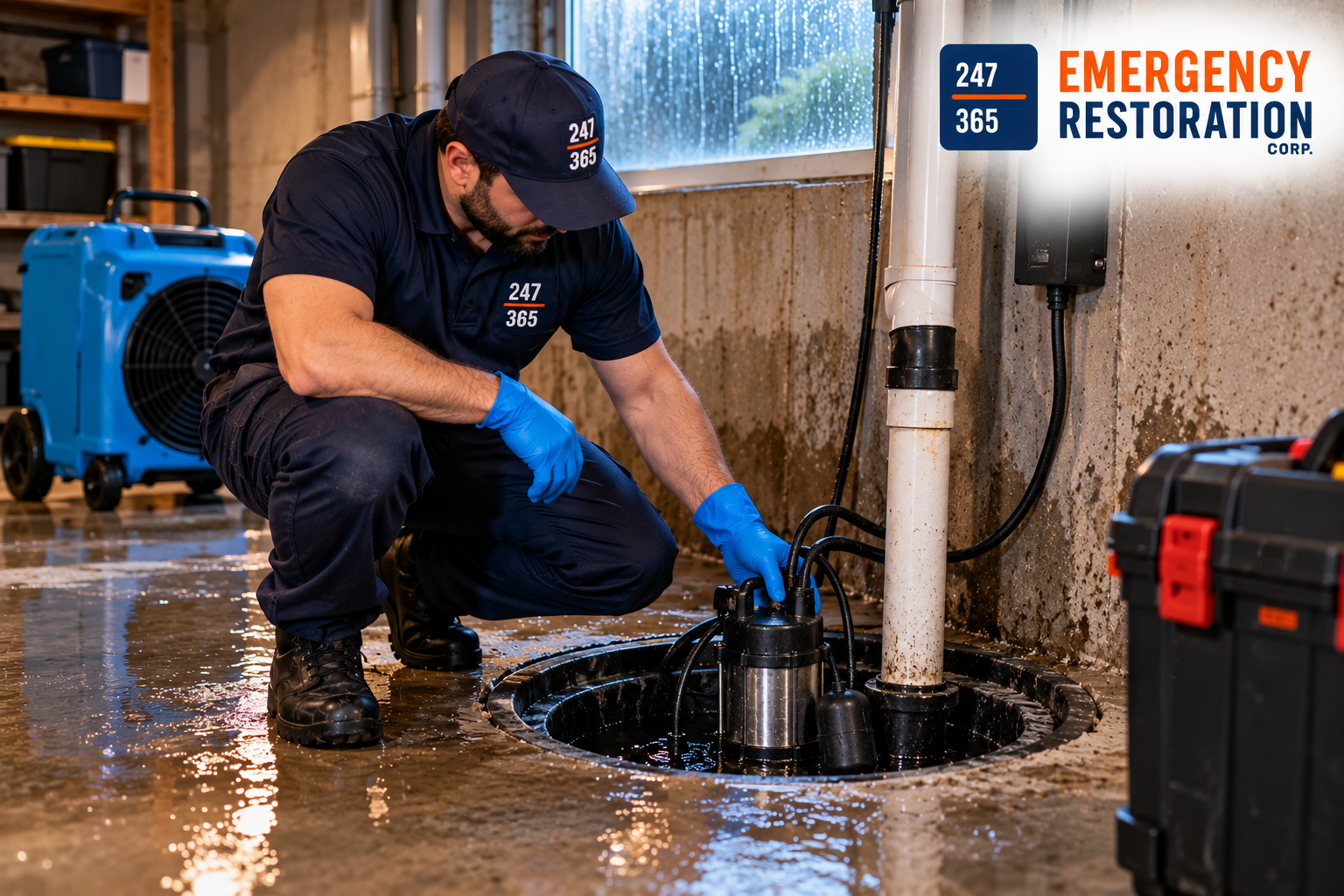
Heavy rain can put significant pressure on a home’s drainage system, especially when large amounts of groundwater begin collecting around the foundation. A sump pump is designed to remove this water and help prevent basement flooding. However, when rainfall becomes intense, the pump may stop working, struggle to keep up with incoming water, or fail because of an electrical or mechanical problem.
Understanding what causes sump pump failure during heavy rain can help homeowners identify potential problems before they result in costly water damage. Regular maintenance, proper installation, and a reliable backup system can significantly reduce the risk of basement flooding during severe weather.
Sump pumps are often used most heavily during storms, which is also when certain weaknesses become more noticeable. Increased groundwater levels, electrical interruptions, clogged pipes, and worn components can prevent the system from operating effectively.
Sometimes, the pump itself is not broken. Instead, the amount of water entering the sump pit exceeds the system’s pumping capacity. Identifying the underlying cause is essential to determining whether the pump needs repair, replacement, or additional drainage support.
One of the most important causes of sump pump failure is a power outage. Many residential sump pumps depend on electricity, and thunderstorms can interrupt the power supply just when groundwater levels are rising.
Without electricity, a standard electric sump pump cannot operate. Water can continue collecting in the sump pit until it overflows into the basement.
Homeowners can reduce this risk by installing a compatible battery backup sump pump or another professionally selected backup system. A high-water alarm can also provide an early warning when the water level rises beyond its normal range.
A qualified electrician or sump pump technician should inspect electrical connections and confirm that the system has an appropriate power supply.
The discharge line carries water away from the sump pump and the home’s foundation. If this pipe becomes blocked, the pump may run without successfully removing enough water.
Debris, sediment, ice in cold weather, damaged piping, or an obstructed discharge outlet can restrict water flow. During heavy rainfall, even a partial blockage can become a serious problem because the volume of incoming water increases.
Common warning signs include a pump that runs continuously, little or no water flowing from the discharge outlet, or water repeatedly returning to the sump pit.
Inspecting the discharge outlet during dry weather and arranging periodic professional maintenance can help identify restrictions before the next storm.
The float switch tells the sump pump when to turn on and off as the water level changes. If the switch becomes stuck, damaged, or improperly positioned, the pump may not activate when the pit fills.
Debris inside the sump basin can interfere with the float’s movement. The pump can also shift out of position, preventing the switch from operating correctly.
A faulty switch may cause the pump to remain off even when water is rising. In other cases, the pump may continue running after the water level has dropped, increasing wear on its motor.
A technician can inspect the switch, remove obstructions, and determine whether adjustment or replacement is necessary.
Not every sump pump problem involves a broken component. During exceptionally heavy rainfall, groundwater may enter the sump pit faster than the pump can remove it.
This can happen when the pump is undersized, the drainage system directs excessive water toward the foundation, or groundwater levels rise beyond the system’s normal operating conditions.
An overwhelmed sump pump may run almost continuously while the water level continues to rise.
A properly sized pump must account for the expected water inflow, the vertical distance water must travel, and resistance within the discharge piping.
A plumbing professional can assess the existing system and determine whether a higher-capacity pump, a secondary pump, or improvements to foundation drainage are appropriate.
Like other mechanical equipment, sump pumps experience wear over time. Bearings, seals, impellers, and electrical components can deteriorate, making the pump less reliable.
Heavy rain can expose these weaknesses because the motor may need to operate more frequently or for longer periods than usual.
Warning signs include grinding noises, unusual vibration, repeated overheating, reduced water flow, and frequent shutdowns.
If the motor has failed or the pump is approaching the end of its useful service life, replacement may be more practical than repairing individual components. The correct decision depends on the pump’s condition, age, repair cost, and performance requirements.
A check valve helps prevent discharged water from flowing back into the sump pit after the pump shuts off.
When this valve becomes damaged, stuck, or improperly installed, some of the discharged water may return to the basin. The pump then has to remove the same water again, potentially increasing its workload and causing frequent cycling.
A malfunctioning check valve can reduce pumping efficiency during heavy rainfall, when the system needs to remove water as quickly as possible.
Professional inspection can confirm whether the valve is working correctly and whether it needs repair or replacement.
Small problems can develop into major failures when a sump pump is not inspected regularly. Dirt, sediment, worn switches, damaged wiring, and restricted discharge pipes can all affect performance.
Testing the pump before the rainy season is particularly important for properties that regularly experience basement moisture or groundwater intrusion.
Homeowners should follow the manufacturer’s maintenance instructions and arrange professional inspections when the pump shows unusual behavior. Backup batteries should also be tested and replaced according to the manufacturer’s recommendations.
Preventive maintenance can reduce the likelihood of unexpected breakdowns and help protect the basement from flooding.
Consider these practical steps:
Test the sump pump periodically according to the manufacturer’s instructions.
Keep the sump basin free from debris that could obstruct the pump or float switch.
Check that the discharge outlet is clear and water flows away from the foundation.
Inspect the check valve and discharge piping for signs of damage.
Install a suitable backup pump or backup power system where appropriate.
Consider a high-water alarm to provide an early warning of rising water.
Arrange professional maintenance if the pump runs continuously, makes unusual noises, or fails to remove water effectively.
No system can guarantee protection against every extreme weather event. However, identifying weaknesses before a storm can reduce the risk of extensive water damage.
If the pump stops working and water begins entering the basement, safety should come first. Never enter standing water if electrical outlets, appliances, cords, or other electrical equipment may be submerged.
If the electrical panel cannot be reached safely from a dry area, stay away from the flooded space and contact a qualified electrician or emergency professional.
Once the area is safe, arrange for a sump pump technician or plumber to identify and correct the problem. If flooding has already occurred, professional water extraction and structural drying may be necessary to address moisture trapped in flooring, drywall, insulation, and other materials.
Prompt cleanup can help limit additional property damage and reduce the risk of mold growth. Simply removing visible water may not be sufficient if moisture has spread into concealed areas.
Sump pump failure during heavy rain can result from power outages, clogged discharge lines, faulty float switches, undersized equipment, worn motors, and inadequate maintenance. In some situations, the pump is functioning correctly but cannot keep up with unusually high groundwater levels.
Regular inspections, proper pump sizing, a suitable backup system, and clear discharge piping can help improve reliability. If your basement has already flooded, addressing both the pump problem and the resulting moisture damage is essential to protecting your property.
Taking preventive action before severe weather arrives can help homeowners reduce flooding risks and avoid unnecessary restoration costs.
Power outages, faulty float switches, mechanical problems, and excessive water inflow are common causes. A pump may also fail to remove water effectively if its discharge line is blocked.
Yes. If groundwater enters the sump pit faster than the pump can discharge it, the water level may continue rising even when the pump is operating normally.
Test the pump regularly, keep the discharge line clear, inspect the float switch, and consider installing a compatible backup pump or backup power system.
Repair may be appropriate if the problem involves a replaceable switch, clogged line, or faulty check valve. Replacement may be necessary when the motor is damaged, the pump is excessively worn, or its capacity is insufficient.
Avoid entering standing water when electrical hazards may be present. Arrange for safe electrical assessment and pump repair, then have standing water removed and affected materials properly dried. Professional water damage restoration may be necessary to address hidden moisture.
50+ Restoration, Environmental, Inspection & Property Maintenance Services – 24/7 Across Southern Ontario