- Available 24/7 — 365 Days a Year
- Toronto & All GTA — Southern Ontario
- IICRC Certified · Insurance Approved
- Residential & Commercial Services

CALL NOW
(416) 657-2222
(416) 657-2222
When it comes to sewage backups, what isn’t immediately visible can cause serious property damage and health risks. Sewage water contains hazardous bacteria and contaminants that can quickly spread through furnace rooms, basements, and surrounding structures if not addressed promptly. In this real restoration showcase, the 247-365 Restoration team responds to a sewage backup in a furnace room, demonstrating our step-by-step emergency sewage cleanup and restoration process designed to protect the property, restore safety, and prevent long-term structural and indoor air quality issues. This property experienced a sewage backup originating in the furnace room, where contaminated water initially spread through floor drains and surrounding areas. Moisture and contamination threatened drywall, flooring, mechanical systems, and air quality. Our team was called in for immediate inspection, sewage extraction, deep cleaning, and professional sanitization — and this video shows exactly how the situation was handled.
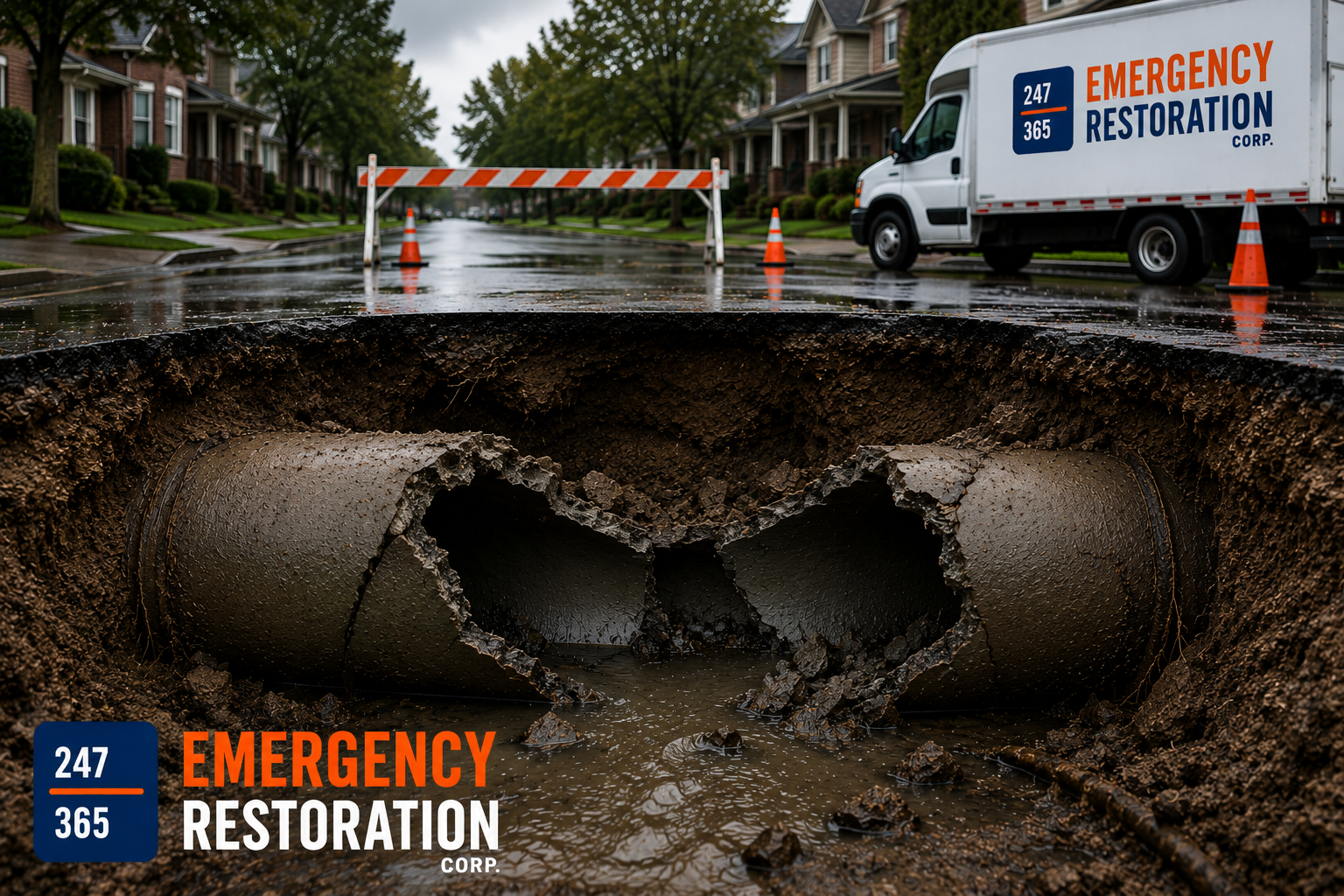
Sewer lines are designed to last for decades, but they are not indestructible. Over time, aging materials, environmental conditions, and unexpected damage can cause underground sewer pipes to crack, shift, or completely collapse. A collapsed sewer line is more than just an inconvenience—it can lead to sewage backups, property damage, unpleasant odors, and costly emergency repairs.
Understanding what causes sewer lines to collapse can help homeowners recognize early warning signs and take preventive action before a minor issue turns into a major restoration project.
Your home’s sewer line carries wastewater safely from your property to the municipal sewer system. When this pipe becomes damaged or collapses, wastewater has nowhere to go. This can result in slow drains, recurring clogs, sewage backing up into your basement, and even contamination of your property.
Prompt diagnosis and professional repair are essential to minimize damage and protect your home’s plumbing system.
One of the leading causes of sewer line failure is age. Older homes often have sewer pipes made from clay, cast iron, Orangeburg, or other materials that deteriorate over time. Decades of exposure to moisture, soil pressure, and everyday use can weaken these materials until they crack or collapse.
If your home is more than 40 to 50 years old, scheduling a professional sewer inspection is a smart preventive measure.
Tree roots naturally seek moisture, making sewer lines an attractive source of water. Tiny cracks or loose pipe joints allow roots to enter the system, where they continue to grow and expand.
Over time, roots can block wastewater flow, separate pipe joints, and even crush older pipes. Root intrusion is one of the most common reasons homeowners require sewer line replacement.
The soil surrounding underground pipes constantly shifts due to weather changes, construction activity, earthquakes, or natural settling. These movements place stress on sewer pipes, causing them to crack, separate, or collapse.
Heavy vehicles driving over underground sewer lines can also increase pressure and contribute to structural failure.
Improper installation can significantly shorten the lifespan of a sewer system. Pipes installed at the wrong slope, poorly connected joints, or inadequate backfilling can create weak points that eventually fail.
Professional installation using quality materials helps reduce the risk of future problems.
Metal sewer pipes, especially cast iron, gradually corrode after years of exposure to wastewater and moisture. Corrosion weakens pipe walls until they become brittle and prone to collapse.
Routine inspections can identify corrosion before a complete failure occurs.
Although blockages do not directly collapse pipes, repeated pressure from severe clogs can place additional stress on an already weakened sewer line.
Grease, wipes labeled as “flushable,” paper towels, sanitary products, and foreign objects should never be flushed down household drains.
Ontario experiences freezing temperatures, heavy rainfall, and seasonal freeze-thaw cycles that can affect underground infrastructure.
Frozen ground expands and contracts, placing additional pressure on buried pipes. Heavy rain can also wash away supporting soil, leaving sections of pipe vulnerable to collapse.
Excavation, landscaping projects, or nearby construction work may accidentally damage underground sewer lines. Even small impacts can weaken a pipe enough to cause failure months or years later.
Before digging on your property, always ensure underground utilities have been properly located.
Recognizing early symptoms can help prevent extensive property damage.
If multiple sinks, tubs, and toilets drain slowly at the same time, the problem may be deeper within the main sewer line rather than a single fixture.
Recurring sewage backups often indicate a damaged or blocked sewer pipe that requires immediate professional attention.
Persistent sewage smells inside or outside your home can signal cracks or breaks in the sewer line that allow gases to escape.
Unexpected soggy patches, unusually green grass, or sinkholes may indicate wastewater leaking underground from a damaged sewer pipe.
A leaking sewer line can gradually wash away soil beneath your home, potentially contributing to foundation settlement and basement moisture issues.
Modern plumbing companies use advanced equipment to identify underground pipe damage without unnecessary excavation.
A sewer camera inspection allows technicians to locate cracks, root intrusion, collapsed sections, corrosion, and blockages with remarkable accuracy. Once the problem is identified, they can recommend the most effective repair or replacement solution.
Not every damaged sewer line needs complete replacement.
Minor cracks or isolated damage may be repaired using trenchless methods such as pipe lining. However, severely collapsed, corroded, or extensively damaged pipes often require full sewer line replacement to restore reliable performance.
A professional assessment will determine the most cost-effective long-term solution.
While some sewer line failures occur because of age, many problems can be prevented with proper maintenance.
Homeowners should schedule periodic sewer camera inspections, avoid flushing inappropriate materials, manage tree roots near underground pipes, repair small plumbing issues promptly, and consider replacing aging sewer systems before catastrophic failure occurs.
Preventive maintenance is almost always less expensive than emergency restoration after a sewer collapse.
If you notice recurring drain problems, sewage odors, frequent backups, or wet areas around your property, do not ignore the warning signs. Early diagnosis can often prevent extensive water damage, contamination, and costly repairs.
Professional sewer line specialists have the equipment and expertise to identify the cause of the problem and recommend the safest, most effective solution.
A collapsed sewer line requires immediate attention to prevent further property damage and health risks. At 247-365 Restoration, our experienced team provides professional sewer inspections, sewer line replacement, and emergency restoration services throughout Toronto and the GTA. Contact us today for fast, reliable service and expert solutions.
Tree root intrusion and aging pipes are among the most common causes. Roots can penetrate small cracks and expand over time, while older pipe materials naturally weaken and become more susceptible to failure.
Common signs include multiple slow drains, recurring sewage backups, foul odors, wet spots in your yard, sinkholes, or unusually lush patches of grass above the sewer line. mould is present.
In some cases, trenchless repair methods such as pipe lining can fix minor damage. However, a fully collapsed or severely damaged pipe usually requires excavation and replacement.her respiratory issues, particularly in sensitive individuals.
Coverage depends on your insurance policy and the cause of the damage. Sudden, accidental damage may be covered, while wear and tear or aging pipes often are not. Check with your insurance provider for details.
Regular sewer camera inspections, avoiding grease and non-flushable items, managing nearby tree roots, and replacing aging pipes before they fail are the best ways to reduce the risk of sewer line collapse.
50+ Restoration, Environmental, Inspection & Property Maintenance Services – 24/7 Across Southern Ontario