- Available 24/7 — 365 Days a Year
- Toronto & All GTA — Southern Ontario
- IICRC Certified · Insurance Approved
- Residential & Commercial Services

CALL NOW
(416) 657-2222
(416) 657-2222
water damage restoration
When a burst pipe under your sink floods your kitchen, time is critical. In this showcase video, 247-Restoration Corp. demonstrates how our expert team handles water damage emergencies with precision, speed, and care — from inspection to full restoration.
Serving homeowners and businesses from Lake Simcoe to Lake Ontario, west to Guelph & Kitchener, and east to Peterborough, 247-Restoration provides trusted, professional 24/7 emergency restoration services across the Greater Toronto Area (GTA).
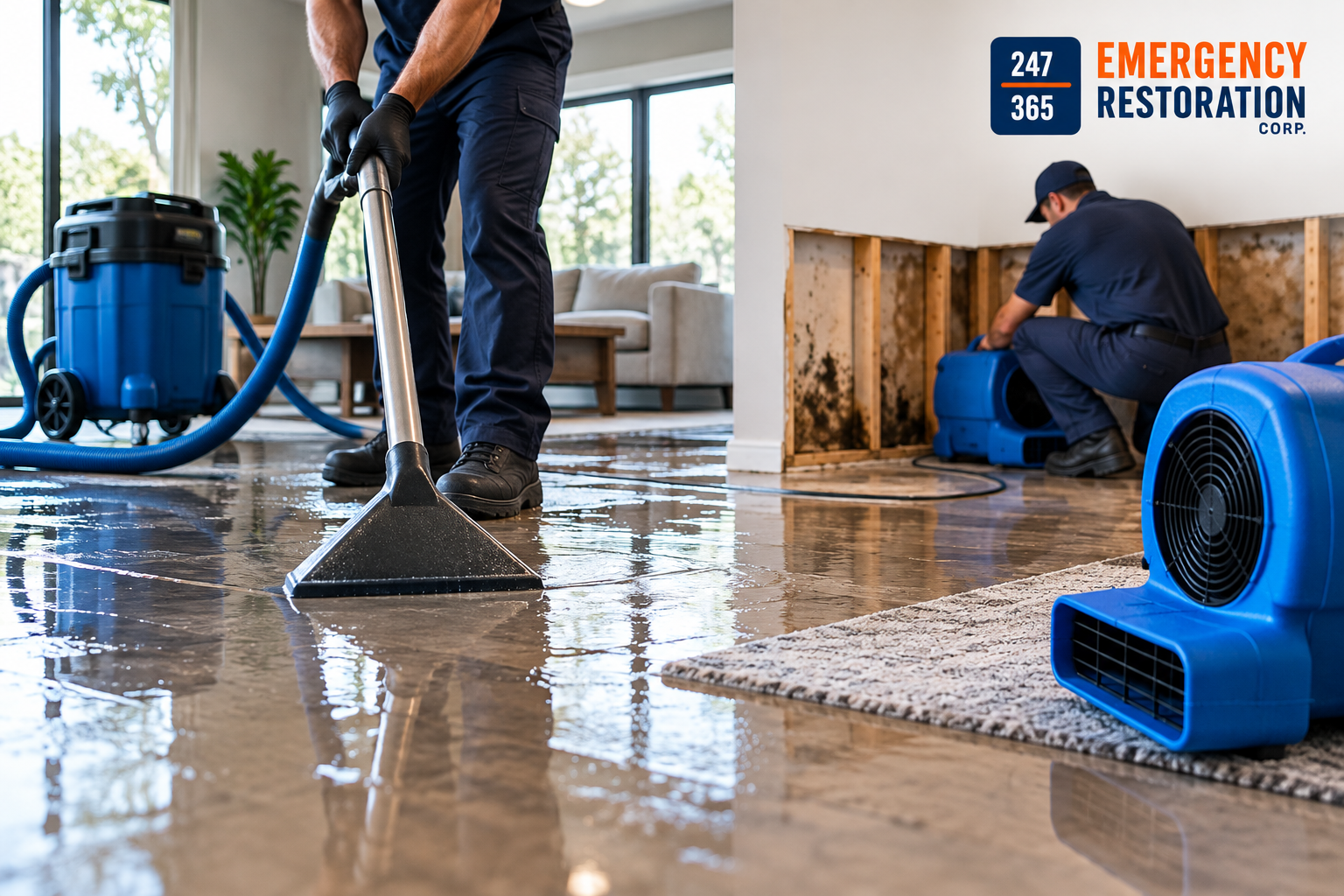
Water damage can happen suddenly because of a burst pipe, overflowing appliance, heavy rain, flooding, sewage backup, or a plumbing problem. When water enters a home or commercial property, quick action is important because standing water can damage flooring, drywall, furniture, insulation, and other building materials.
Two terms that are often used when discussing water damage are water extraction and water damage restoration. Although they are closely connected, they are not the same service. Water extraction focuses primarily on removing unwanted water, while water damage restoration is a broader process that addresses drying, cleaning, damage assessment, repairs, and returning the affected property to a safe and usable condition.
Understanding the difference can help property owners know what to expect after a water emergency.
Water extraction is the process of removing standing water and excess moisture from an affected property.
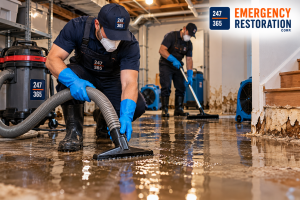
After a water leak or flood, large amounts of water can remain on floors, inside carpets, or in other areas. Professional restoration technicians use specialized equipment such as wet vacuums, pumps, and extraction systems to remove this water as quickly as possible.
The goal is to reduce the amount of water remaining in the property and prevent additional damage.
Water extraction may be necessary after:
Removing visible water is an important first step, but it does not necessarily mean the property is completely dry.
Standing water can continue affecting building materials even after the original source of the leak has been stopped.
Water can soak into carpets, flooring, drywall, wood, insulation, and furniture. Moisture can also move into areas that are not immediately visible.
The longer these materials remain wet, the greater the potential for additional damage and microbial growth.
Professional water extraction helps reduce the amount of moisture that remains in the affected area. However, extraction is only one part of a complete water damage response.
Water damage restoration is a much broader process.
Instead of focusing only on removing water, restoration addresses the overall impact of water damage on the property. Depending on the situation, the process can include inspection, water extraction, structural drying, cleaning, moisture monitoring, removal of damaged materials, repairs, and restoration of affected areas.
A typical restoration process may include:
The exact process depends on the type, amount, and source of water damage.
The easiest way to understand the difference is to think of extraction as one step within restoration.
Water extraction removes excess water.
Water damage restoration addresses the broader consequences of the water event.
For example, imagine a washing machine hose breaks and floods part of a basement. A technician may first use extraction equipment to remove the standing water. After that, the restoration process may involve placing air movers and dehumidification equipment, checking moisture levels, evaluating the flooring and drywall, cleaning affected surfaces, and repairing materials that were damaged.
Simply removing the visible water does not guarantee that moisture has been removed from the building.
After standing water has been extracted, moisture can remain inside building materials.
Carpet padding, drywall, wood flooring, subfloors, and insulation can hold moisture even when the surface appears dry.
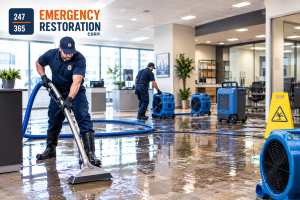
Professional restoration companies use equipment such as air movers and dehumidifiers to help accelerate drying and control indoor moisture.
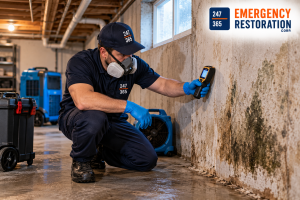
Technicians may also use moisture meters or other measurement tools to identify areas that remain wet.
This is why professional restoration can involve several stages rather than simply pumping out water and leaving the property.
Incomplete drying can create ongoing property problems.
Moisture trapped behind walls or beneath flooring can contribute to deterioration and microbial growth. Wood materials may swell or warp, while drywall can become soft or damaged.
Persistent moisture can also contribute to unpleasant odors and create conditions that make the property more difficult to restore later.
For this reason, a proper water damage response should focus on both water removal and moisture control.
Not every water incident causes the same level of damage.
A small, quickly addressed leak may require limited cleanup and drying. A major flood that affects walls, flooring, insulation, electrical systems, and structural materials may require a much more extensive restoration process.
The appropriate response depends on factors such as:
A professional assessment can help determine the appropriate scope of work.
The source of the water is also an important consideration.
Water from a clean supply line may present different cleanup requirements than water from a toilet overflow, sewage backup, or flood involving contaminated water.
If the water may contain sewage or other contaminants, property owners should avoid unnecessary contact and seek appropriate professional assistance.
Restoration professionals can evaluate the situation and determine what cleaning, containment, removal, or protective measures may be necessary.
Professional help may be appropriate when there is significant standing water, widespread damage, hidden moisture, contaminated water, or damage affecting walls, flooring, ceilings, or other building materials.
It can also be useful when the water source is unclear or when the affected area cannot be adequately dried using household equipment.
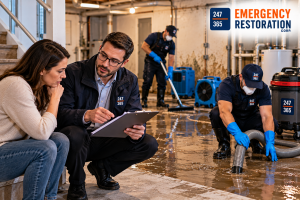
A professional restoration company can assess the affected areas, identify moisture, remove water, and develop a restoration plan based on the property’s condition.
For very small and isolated water incidents, homeowners may be able to remove limited amounts of clean water themselves.
However, larger water events can be more complicated than they initially appear. Water can move beneath flooring, behind walls, and into other hidden spaces.
Homeowners should also be cautious around electrical equipment, contaminated water, sewage, and structural damage.
If there is significant flooding or uncertainty about the extent of the damage, professional assessment is a safer approach.
When water damage occurs, responding quickly can help limit the amount of time materials remain exposed to moisture.
247-365 Emergency Restoration Corp. provides emergency restoration services designed to address water-related property damage. A professional response can include water extraction, drying, moisture assessment, cleanup, and restoration depending on the specific situation.
The exact services required will depend on the cause and severity of the water damage.
Water extraction is the process of removing standing water from a property.
It is the broader process of drying, cleaning, repairing, and restoring areas affected by water damage.
Yes. Water extraction is usually one of the first steps in the restoration process.
It helps remove excess water quickly and reduce the risk of further moisture-related damage.
Not always. The required service depends on the amount of water, affected materials, and extent of the damage.
50+ Restoration, Environmental, Inspection & Property Maintenance Services – 24/7 Across Southern Ontario