- Available 24/7 — 365 Days a Year
- Toronto & All GTA — Southern Ontario
- IICRC Certified · Insurance Approved
- Residential & Commercial Services

CALL NOW
(416) 657-2222

(416) 657-2222
Flooded Basement from Sump Pump Failure?
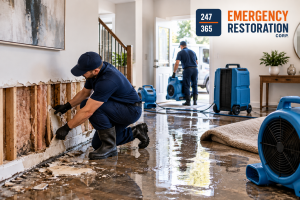
This video shows how a silent sump pump failure turned a finished basement into a flood zone—and how 247-365 Restoration Corp. brought it back fast. If you’re in Toronto & the GTA and woke up to standing water, soaked drywall, or that musty “mold is coming” smell, you’re in the right place.
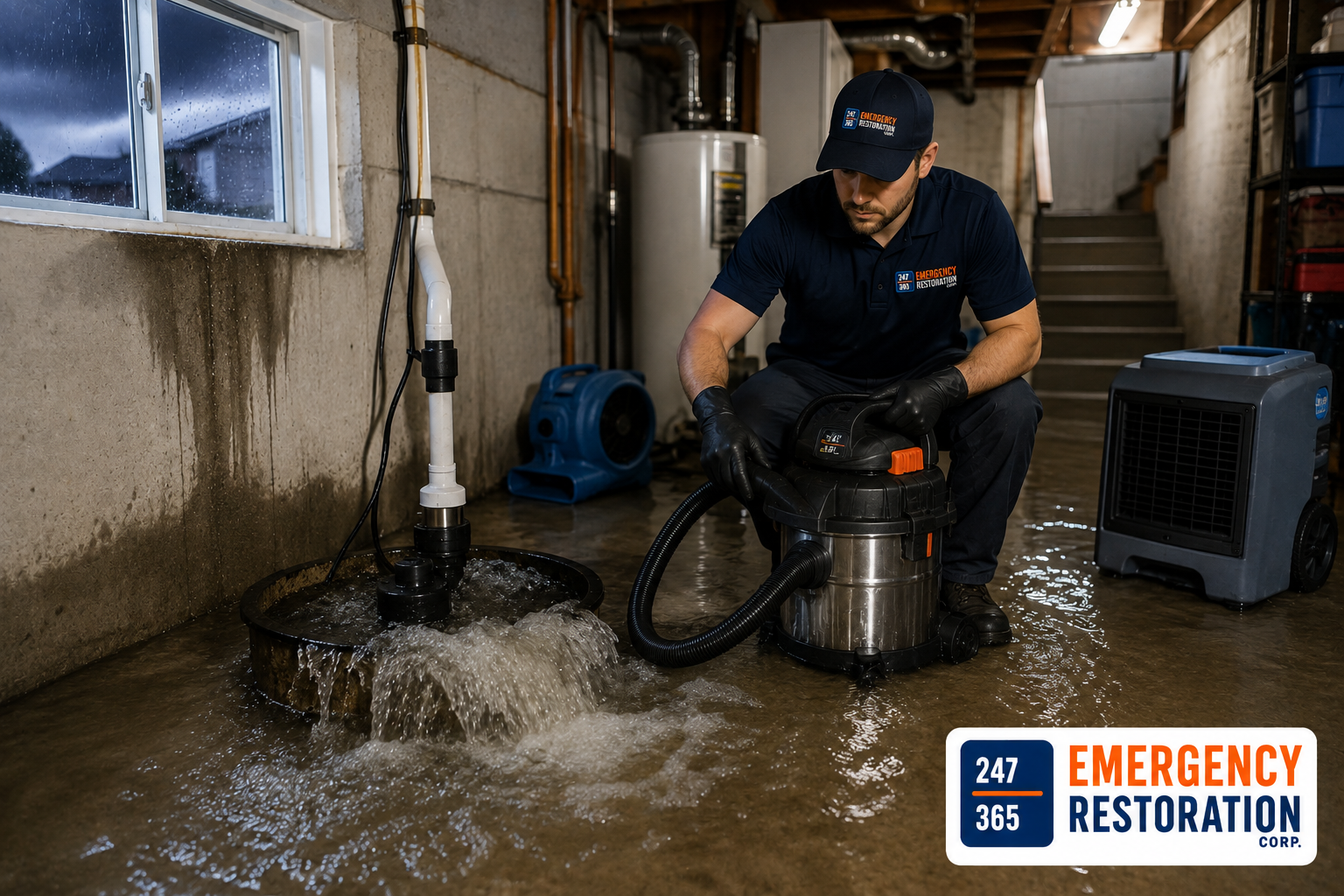
A sump pump plays an important role in protecting a basement or crawl space from unwanted water. When the system stops working properly, homeowners often face an important question: should you repair the sump pump or replace it? Choosing the right option depends on the pump’s age, the type of problem, repair costs, and its overall condition.
A quick repair may be enough when the problem is minor and the pump is relatively new. However, replacing an old or repeatedly failing sump pump may provide better long-term reliability. Understanding the warning signs can help homeowners make a practical decision before the next heavy rain or flooding event.
A sump pump removes water that collects in a sump pit, usually located in a basement or crawl space. When the water level rises, the pump activates and moves the water away from the building through a discharge pipe.
A properly functioning sump pump can help reduce the risk of basement flooding and water damage. Because the pump may operate frequently during periods of heavy rain or high groundwater, regular inspection and maintenance are important.
Repairing a sump pump can make sense when the unit is relatively new and the problem involves a replaceable or minor component.
Some sump pump problems may be related to the float switch, power connection, clogged discharge line, or other components that can potentially be repaired or replaced without replacing the entire pump.
A professional inspection can help determine whether the pump itself is still in good working condition.
If a newer sump pump suddenly stops working, replacement may not be necessary. A repair can restore the system while allowing the homeowner to continue using an otherwise reliable pump.
A healthy motor is an important factor when deciding whether to repair a pump. If the motor runs normally and the issue is isolated to another component, repairing the problem may be more cost-effective than installing a completely new system.
If the cost of repair is significantly lower than the cost of replacement and the pump has plenty of useful life remaining, repair may be the better short-term option.
Replacement is often worth considering when a pump is old, unreliable, or experiencing major mechanical problems.
Sump pumps have a limited service life, and older units may become less reliable over time. If an aging pump begins showing multiple problems, replacement can provide greater peace of mind than repeatedly repairing the same unit.
Frequent failures are an important warning sign. If you have already repaired the pump several times and it continues to malfunction, the accumulated repair costs may make replacement a more practical choice.
A failed motor can be a major problem, particularly when the pump is already old. Depending on the pump’s age and repair cost, installing a new unit may make more financial sense.
Sometimes the problem is not simply that the pump is broken. The existing pump may not have enough capacity for the amount of water entering the sump pit.
In this situation, replacing the pump with a properly sized unit may provide better protection.
The cost of sump pump repair varies depending on the specific problem, replacement parts, labor, pump type, and whether emergency service is required.
A simple component replacement may cost considerably less than replacing the entire pump. However, homeowners should also consider the age and condition of the existing unit.
The cheapest immediate repair is not always the most cost-effective long-term solution if the pump is already approaching the end of its useful life.
Sump pump replacement costs depend on several factors, including the pump model, capacity, installation requirements, discharge piping, labor, and whether additional equipment such as a backup pump is installed.
A professional can inspect the existing setup and recommend a pump that is appropriately sized for the property’s water conditions.
Knowing the warning signs can help homeowners address a failing pump before a major basement flooding event.
Continuous operation may indicate that the pump is struggling to remove incoming water or that there is an issue with the float switch, discharge system, or pump capacity.
Grinding, rattling, or other unusual sounds may indicate mechanical problems. These sounds should not be ignored, especially if they occur repeatedly.
A pump that fails to activate when the water level rises may have an electrical, switch, motor, or mechanical problem.
This can indicate a clogged discharge line, damaged components, improper installation, or a pump that is no longer operating effectively.
Repeated failures can indicate that the pump is reaching the end of its service life.
Visible corrosion or deterioration can affect the pump’s components and may be a sign that replacement should be considered.
Even if an older pump is still operating, homeowners may want to consider proactive replacement rather than waiting for a complete failure during a storm.
The best decision depends on several factors rather than one single rule.
Repair may be the better choice when:
Replacement may be the better choice when:
When in doubt, having the system professionally inspected can help determine whether repair or replacement offers better long-term value.
A sump pump problem is not always caused by the pump itself. Issues with the float switch, power supply, discharge pipe, check valve, or sump pit can affect performance.
A professional inspection can identify the actual source of the problem before a homeowner spends money on unnecessary repairs or replacement.
Professional assessment is particularly important when a sump pump has failed during heavy rainfall or when water is already entering the basement.
Regular maintenance can help improve sump pump reliability and identify problems before an emergency occurs.
Testing the pump helps confirm that the float switch activates the system and that water is being discharged properly.
The discharge pipe should be clear and able to move water away from the property.
Debris can interfere with pump operation and potentially cause blockages.
Homes that are particularly vulnerable to basement flooding may benefit from a backup sump pump or battery backup system. A backup can provide additional protection if the primary pump fails or power is interrupted.
There is no universal answer to the question of whether sump pump repair or replacement is better. Repair is often appropriate for a newer pump with a minor, isolated problem, while replacement may be the smarter choice for an aging pump with repeated failures or major component damage.
The most important factor is reliable protection. A sump pump that fails when heavy rain arrives can allow water to accumulate rapidly and potentially cause expensive basement damage.
If your sump pump is making unusual noises, running constantly, failing to remove water, or breaking down repeatedly, professional inspection can help determine whether repair or replacement is the right solution for your home.
Repair is often better when the pump is relatively new and has a minor, isolated problem. Replacement may be more practical when the pump is old, unreliable, or has major component failure.
Frequent breakdowns, unusual noises, constant running, poor water removal, significant corrosion, or an aging pump can all indicate that replacement should be considered.
A sump pump commonly lasts several years, but its lifespan depends on usage, water volume, maintenance, pump quality, and operating conditions
Repair costs vary depending on the problem, replacement parts, labor, and pump type. A professional inspection can help determine whether repairing the existing unit is more cost-effective than replacing it.
Yes. If a sump pump cannot remove incoming water, water may accumulate in the basement or crawl space and potentially cause flooding, moisture damage, and other property problems.
50+ Restoration, Environmental, Inspection & Property Maintenance Services – 24/7 Across Southern Ontario