- Available 24/7 — 365 Days a Year
- Toronto & All GTA — Southern Ontario
- IICRC Certified · Insurance Approved
- Residential & Commercial Services

CALL NOW
(416) 657-2222

(416) 657-2222
Attic Mold
In this exclusive attic mold inspection video, the 247-365 Restoration team shows how easily mold can hide above your ceiling—and what it takes to find and fix it before it affects your air quality, insulation, or structure.
Join our certified mold specialists as they conduct a real attic mold inspection in the Greater Toronto Area (GTA).
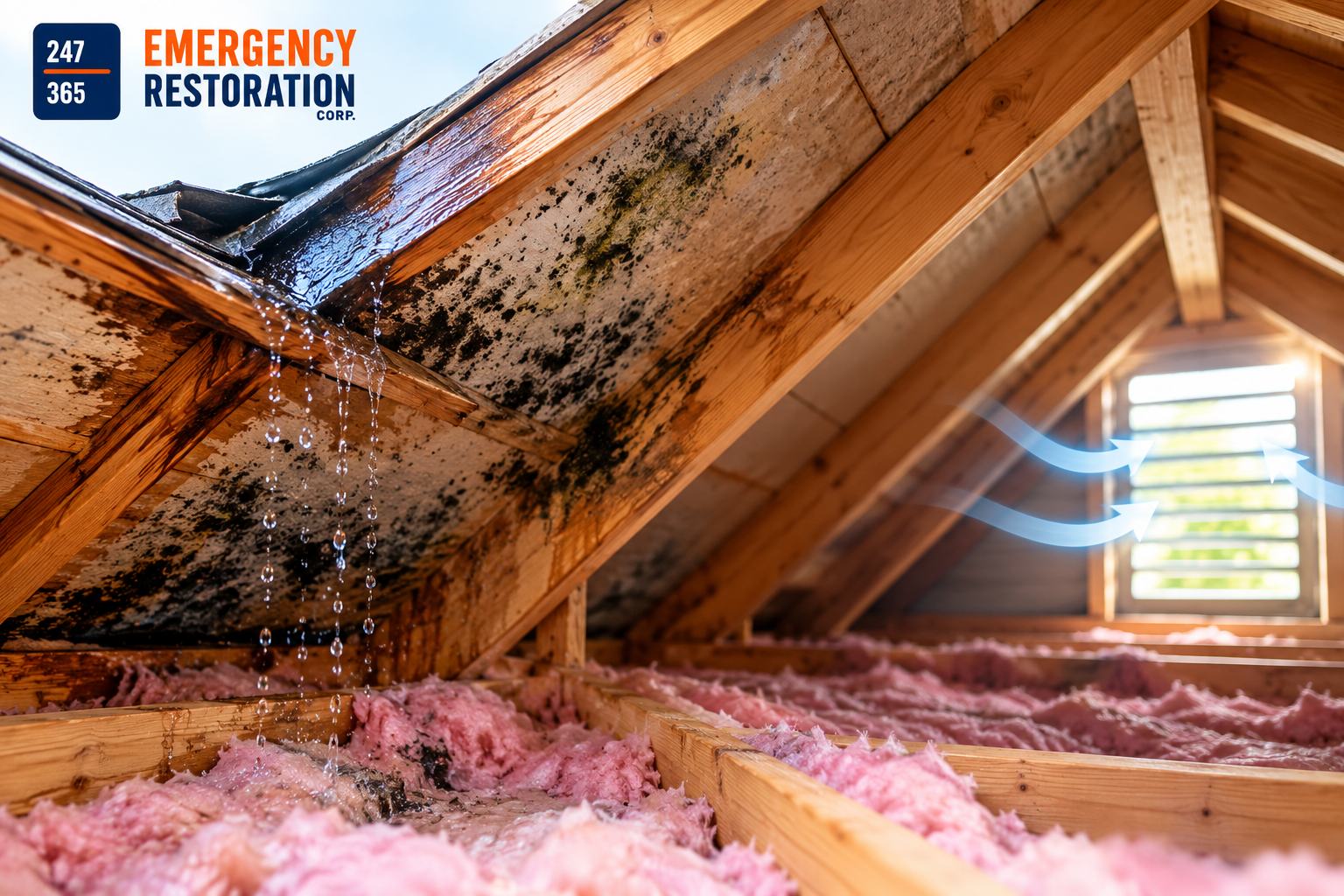
Attic mould can develop when moisture remains trapped in an attic for extended periods. Two common causes of attic moisture are roof leaks and poor ventilation. When these problems occur together, they can create conditions that allow mould to grow on insulation, roof decking, rafters, and other building materials.
Understanding how roof leaks and inadequate ventilation contribute to attic mould can help property owners recognize warning signs and address moisture problems before they become more extensive.
A damaged roof can allow rainwater or melting snow to enter the attic. Missing or damaged shingles, deteriorated flashing, damaged roof valleys, and other roofing problems can create pathways for water intrusion.
Once water enters the attic, it can soak insulation, wood framing, and roof decking. If these materials do not dry properly, prolonged moisture can create favorable conditions for mould growth.
Property owners may notice:
A roof leak may not always be visible from inside the attic. Water can travel along roofing materials or structural components before appearing in another location.
Proper attic ventilation helps move warm, humid air out of the attic and allows fresh air to circulate. When ventilation is inadequate, moisture can become trapped.
During colder weather, warm indoor air can rise into the attic and condense when it contacts colder roof surfaces. Repeated condensation can increase moisture levels in insulation and wood components.
Poor ventilation can therefore contribute to persistent humidity even when there is no active roof leak.
Roof leaks and poor ventilation can create an even greater moisture problem. A roof leak introduces water directly into the attic, while inadequate airflow can slow the drying process.
If wet materials remain damp for an extended period, mould can develop and spread across nearby surfaces.
For this reason, addressing only the visible mould may not solve the underlying problem. The source of moisture should also be identified and corrected.
Preventive maintenance can help reduce attic moisture problems. Property owners should regularly inspect roofing materials, flashing, vents, and attic spaces for signs of water intrusion.
Improving ventilation where appropriate can also help control humidity and condensation. Any active roof leak should be repaired promptly, and wet insulation or other damaged materials should be assessed for proper restoration or replacement.
If mould is widespread or moisture damage is significant, a professional inspection can help determine the appropriate remediation and restoration steps.
Roof leaks and poor ventilation are two important sources of attic moisture. A roof leak can introduce water directly into the attic, while inadequate ventilation can trap humidity and encourage condensation. When moisture remains in building materials, mould can develop and potentially spread.
Identifying and correcting the source of moisture is an important part of addressing attic mould. Regular roof inspections, proper ventilation, and prompt attention to water intrusion can help protect the attic and the rest of the property.
Yes. Water entering through a damaged roof can soak attic materials and create conditions that support mould growth.
Yes. Poor ventilation can trap humid air and contribute to condensation and persistent moisture.
Common signs include dark spots, musty odors, discolored insulation, and visible growth on wood or other materials.
Repair roof leaks, improve appropriate attic ventilation, control moisture, and address wet materials promptly.
Professional inspection can be useful when mould is extensive, moisture sources are unclear, or significant water damage is present.
50+ Restoration, Environmental, Inspection & Property Maintenance Services – 24/7 Across Southern Ontario