- Available 24/7 — 365 Days a Year
- Toronto & All GTA — Southern Ontario
- IICRC Certified · Insurance Approved
- Residential & Commercial Services

CALL NOW
(416) 657-2222
(416) 657-2222
– How Sewage Damage Can Affect Your Home’s Structure?
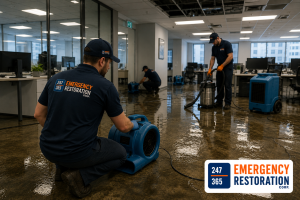
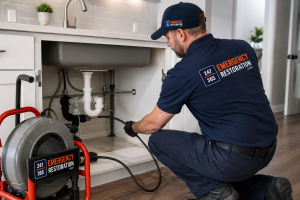
When a sewage backup strikes your home or business, it’s more than just a plumbing issue — it’s a serious health emergency that requires professional attention. In this real-life showcase video, you’ll see the 247-365 Restoration team responding to a drain snaking and sewage cleanup emergency that could have caused extensive damage if left untreated.
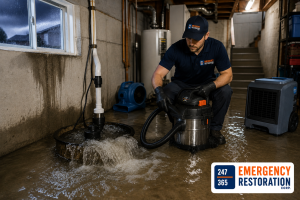
Our crew received an urgent call from a homeowner dealing with a blocked main sewer line that had forced sewage water back into their basement. For more information Call us : 416-657-2222
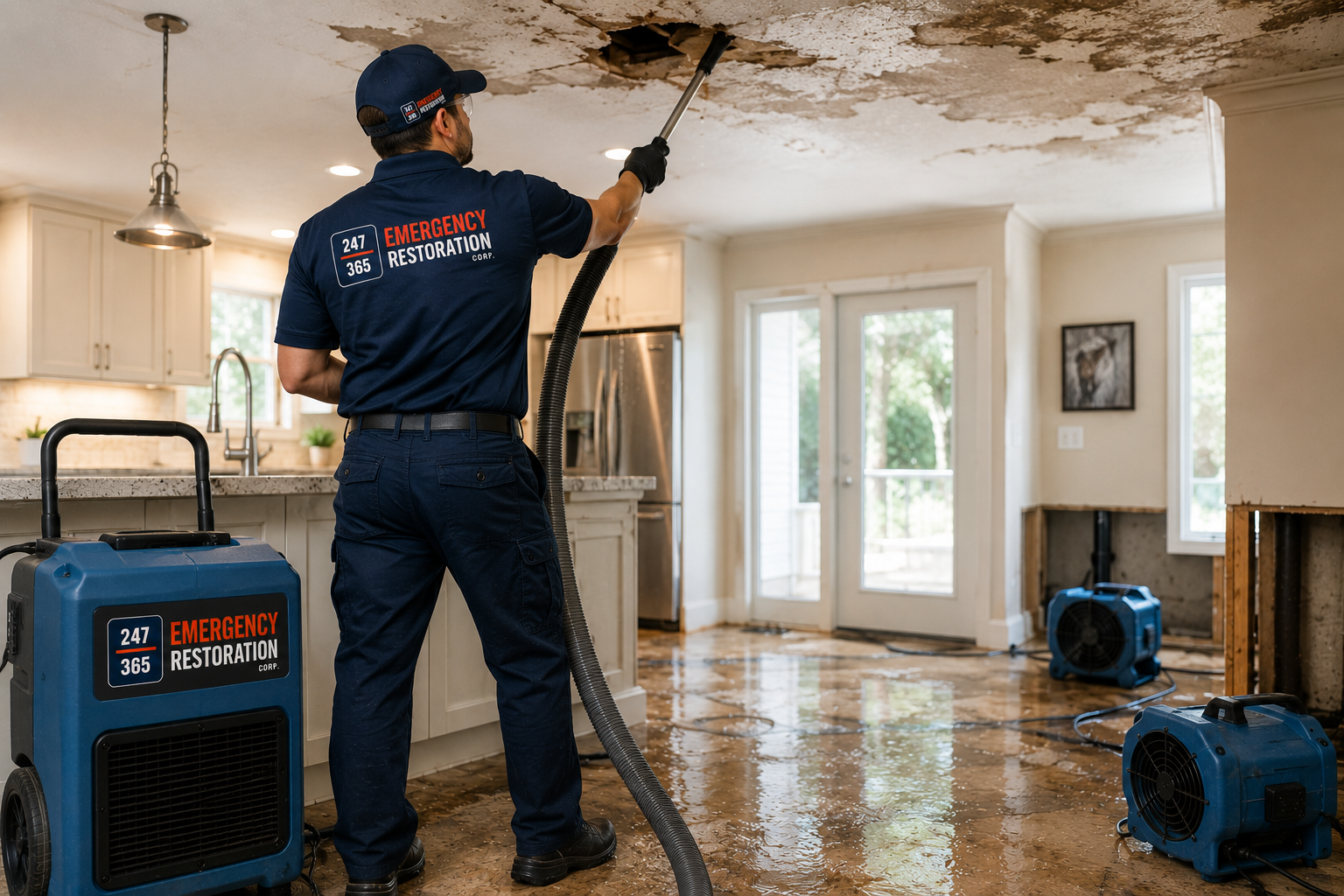
Sewage damage is one of the most serious forms of property damage a homeowner can experience. Unlike clean water from a broken supply line, sewage contains harmful bacteria, viruses, parasites, and toxic contaminants that threaten both your property and your health. While many people focus on the unpleasant odor and immediate cleanup, the hidden structural damage caused by sewage is often far more expensive and dangerous.
When sewage enters your home, it doesn’t simply sit on the floor. Contaminated water quickly penetrates porous building materials, weakens structural components, and creates ideal conditions for mold growth. If the damage is not addressed immediately by certified restoration professionals, what starts as a minor backup can eventually compromise the safety and integrity of your entire home.
Water damage can originate from several sources, including broken pipes, leaking appliances, roof leaks, or heavy rainfall. Sewage damage, however, is classified as Category 3 Water Damage, also known as “black water.” This highly contaminated water contains human waste, bacteria, fungi, chemicals, and other hazardous materials.
Because of these contaminants, sewage cleanup requires specialized equipment, personal protective equipment (PPE), proper disposal procedures, and professional sanitization. Attempting to clean sewage yourself not only increases the risk of illness but may also leave hidden contamination behind.
One of the biggest misconceptions is that sewage only affects flooring. In reality, contaminated water spreads rapidly through many structural elements of a building.
Wood absorbs moisture quickly. Once sewage saturates wooden studs, floor joists, beams, or subfloors, the wood begins to weaken. Extended exposure causes swelling, warping, and eventually rot.
As the structural framework deteriorates, walls and floors may become unstable, requiring significant reconstruction instead of simple repairs.
Drywall acts like a sponge. It absorbs contaminated water within minutes, allowing bacteria and moisture to travel upward through the walls.
Even if drywall appears dry on the surface, moisture can remain trapped inside, creating ideal conditions for mold growth. In most sewage situations, affected drywall must be removed and replaced to eliminate contamination completely.
Hardwood flooring expands when exposed to sewage. Laminate flooring often delaminates, while carpeting absorbs contaminants deep into the fibers and padding.
Tile flooring may seem waterproof, but sewage can seep beneath the tiles through grout lines, damaging the subfloor underneath.
Professional restoration companies inspect every flooring layer to determine whether materials can be salvaged or require replacement.
Visible standing water is only part of the problem.
Moisture frequently travels into wall cavities, insulation, crawl spaces, and beneath flooring materials where it remains unnoticed for days or even weeks.
Without professional moisture detection equipment, homeowners may believe the property has dried when hidden moisture is still actively damaging structural materials.
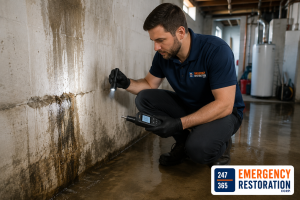
Certified restoration technicians use thermal imaging cameras, moisture meters, and humidity monitoring equipment to identify moisture that cannot be seen with the naked eye.
Mold can begin growing within 24 to 48 hours after a sewage backup if affected materials remain damp.
Once mold develops, the problem becomes much larger than water damage alone.
Mold spreads through airborne spores, affecting indoor air quality and potentially causing respiratory irritation, allergic reactions, and other health concerns.
Professional sewage restoration includes complete drying, antimicrobial treatment, and mold prevention to reduce the likelihood of secondary contamination.
Many homeowners are surprised to learn that sewage can affect the structural foundation of a property.
Repeated backups or prolonged standing water may saturate concrete floors and seep into cracks around the foundation.
Over time, moisture can weaken concrete surfaces, damage floor supports, and contribute to structural movement if drainage problems continue.
Basements are particularly vulnerable because they often experience poor ventilation, allowing moisture to remain trapped for extended periods.
Sewage water often reaches electrical outlets, wiring, furnaces, water heaters, and HVAC systems.
This creates two major risks:
Professional restoration teams coordinate with licensed electricians and HVAC specialists whenever contaminated water affects these systems.
Beyond structural concerns, sewage exposure presents serious health hazards.
Contaminated water may contain:
Direct contact with contaminated materials may cause skin infections, gastrointestinal illness, respiratory issues, and other serious medical conditions.
For this reason, professionals wear protective suits, gloves, respirators, and specialized equipment during cleanup.
Every hour matters after a sewage backup.
The longer contaminated water remains inside the property, the greater the damage becomes.
Rapid professional response helps:
Delaying cleanup often results in replacing significantly more building materials than would have been necessary with an immediate response.
A professional restoration company follows a systematic process to ensure the property is safely restored.
Technicians inspect the affected areas, identify contamination levels, and determine the source of the sewage backup.
Industrial pumps and extraction equipment remove standing sewage as quickly as possible.
Porous materials that cannot be safely disinfected—including drywall, insulation, carpet padding, and certain flooring products—are removed.
All remaining structural surfaces are thoroughly cleaned using hospital-grade disinfectants and antimicrobial treatments.
Commercial air movers and dehumidifiers eliminate hidden moisture from walls, floors, and framing.
Technicians continuously monitor moisture levels until every structural component reaches acceptable drying standards.
Depending on the extent of the damage, restoration may include replacing drywall, flooring, trim, insulation, cabinetry, or structural framing.
Although not every sewage backup can be prevented, homeowners can reduce the risk by taking proactive maintenance measures.
Preventive maintenance is far less expensive than repairing extensive sewage damage.
Sewage damage is far more than an unpleasant cleanup job. It threatens your home’s structural integrity, creates serious health risks, and can lead to expensive long-term repairs if not addressed properly.
Professional restoration specialists have the equipment, training, and experience needed to safely remove contaminated materials, thoroughly disinfect affected areas, eliminate hidden moisture, and restore your property to a safe condition.
If your home experiences a sewage backup, don’t wait for the damage to worsen. Contact 247-365 Restoration immediately for 24/7 emergency sewage damage restoration services. Our experienced team responds quickly to minimize structural damage, protect your family’s health, and restore your home as efficiently as possible.
Yes. Sewage water can saturate wood framing, drywall, insulation, flooring, and subfloors, leading to structural deterioration if not cleaned and dried immediately.
Absolutely. Sewage contains harmful bacteria, viruses, parasites, and other contaminants that can pose serious health risks without proper cleanup and disinfection.
Professional cleanup should begin as soon as possible. Delaying restoration increases structural damage, contamination, and the likelihood of mold growth.
Yes. Moisture left behind after a sewage backup can allow mold to begin growing within 24 to 48 hours if affected materials are not properly dried.
Porous materials such as drywall, insulation, carpeting, and some wood products often need to be removed and replaced after exposure to sewage contamination to ensure a safe and healthy environment.
50+ Restoration, Environmental, Inspection & Property Maintenance Services – 24/7 Across Southern Ontario