- Available 24/7 — 365 Days a Year
- Toronto & All GTA — Southern Ontario
- IICRC Certified · Insurance Approved
- Residential & Commercial Services

CALL NOW
(416) 657-2222

(416) 657-2222
How Fast Can a Basement Flood After Sump Pump Failure?
Flooded Basement from Sump Pump Failure?
This video shows how a silent sump pump failure turned a finished basement into a flood zone—and how 247-365 Restoration Corp. brought it back fast. If you’re in Toronto & the GTA and woke up to standing water, soaked drywall, or that musty “mold is coming” smell, you’re in the right place.
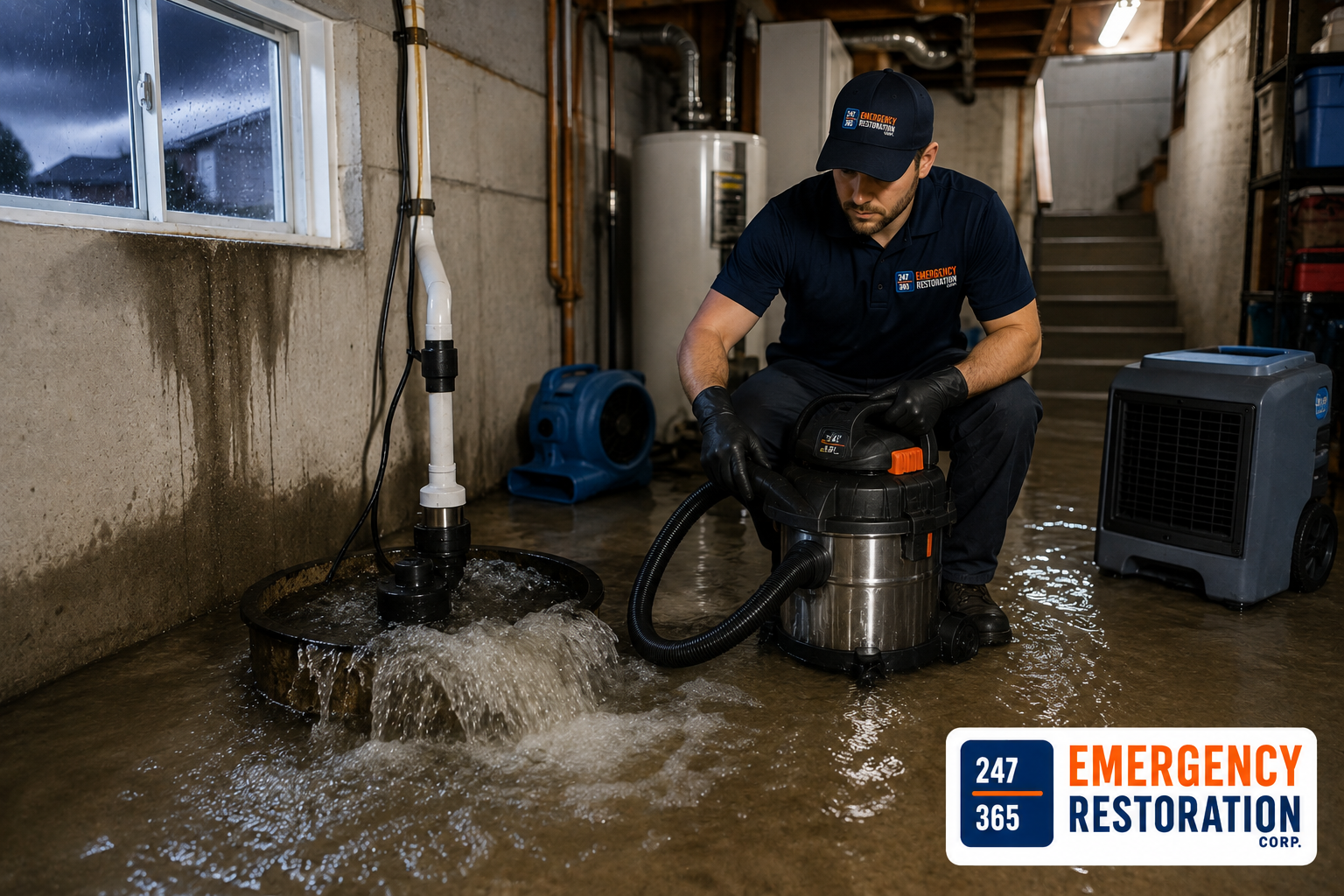
A sump pump is one of the most important pieces of equipment protecting your home from water damage. Installed in the lowest part of a basement or crawl space, it collects excess groundwater and pumps it safely away from your foundation. Most homeowners rarely think about their sump pump—until it stops working.
When a sump pump fails during heavy rain or rapid snowmelt, the consequences can be immediate. Water can begin accumulating in your basement within minutes, causing damage to flooring, drywall, insulation, furniture, and valuable belongings. If left untreated, a flooded basement can also lead to mold growth, structural deterioration, and costly repairs.
Understanding how quickly a basement can flood after sump pump failure—and knowing what to do next—can help minimize damage and protect your home.
A sump pump is designed to prevent groundwater from entering your basement. Water naturally collects in a sump pit beneath your basement floor. When the water reaches a certain level, the sump pump automatically activates and pumps the water outside through a discharge pipe.
This system helps protect your home’s foundation and keeps the basement dry, especially during heavy rainfall, spring snowmelt, or periods of high groundwater.
Without a properly functioning sump pump, water has nowhere to go and can quickly overflow into your basement.
The answer depends on several factors, including weather conditions, groundwater levels, foundation drainage, and the severity of the sump pump failure.
During an intense rainstorm, water can begin entering the basement within just a few minutes after the sump pump stops working. In some cases, several inches of water may accumulate in less than an hour.
Homes located in low-lying areas or regions with poor drainage are especially vulnerable. If your property already experiences high groundwater pressure, even a short power outage or mechanical failure can result in significant flooding.
The faster water enters your basement, the greater the risk of permanent property damage.
Understanding why sump pumps fail can help homeowners prevent unexpected flooding.
One of the most common causes of sump pump failure is a loss of electrical power. Unfortunately, severe storms that produce heavy rainfall often cause power outages at the exact moment your sump pump is needed most.
Installing a battery backup system can help keep your sump pump operating during electrical failures.
Like any mechanical device, sump pumps wear out over time. Motors, switches, bearings, and impellers can eventually fail, especially if the pump has not been regularly maintained.
Most sump pumps have a lifespan of approximately 7 to 10 years.
The discharge pipe carries water away from your home. If it becomes clogged with dirt, debris, ice, or tree roots, water cannot exit properly and may flow back into the basement.
Some storms simply produce more water than an older or undersized sump pump can handle. Continuous operation may eventually overheat the motor or reduce pumping efficiency.
Many homeowners forget to inspect or test their sump pumps. Dirt buildup, stuck float switches, and clogged intake screens can all prevent the pump from operating correctly when needed.
Floodwater affects much more than the visible floor surface.
Water quickly soaks into:
Even after standing water is removed, moisture trapped behind walls and beneath flooring continues causing damage.
Within 24 to 48 hours, mold may begin growing in damp building materials if professional drying does not begin immediately.
Many homeowners believe the damage ends once the water is extracted. Unfortunately, hidden moisture often creates additional long-term problems.
Wood framing, support beams, and subfloors absorb water rapidly. Extended moisture exposure can weaken structural components and require expensive repairs.
Mold spores thrive in damp environments. A flooded basement provides ideal conditions for mold to spread behind walls, beneath flooring, and inside insulation.
Water entering electrical outlets, appliances, or wiring can create dangerous shock hazards and increase the risk of electrical fires.
Excess moisture and mold growth reduce indoor air quality and may trigger allergies, asthma, or respiratory problems for occupants.
Quick action is critical.
First, avoid entering standing water if electrical hazards are present. Turn off power to the affected area only if it is safe to do so.
If possible, determine why the sump pump stopped working. Check whether a power outage has occurred, whether the circuit breaker has tripped, or whether the float switch is stuck.
Remove valuable belongings from affected areas and contact a professional water damage restoration company immediately.
The sooner restoration begins, the greater the chance of saving flooring, drywall, furniture, and personal possessions.
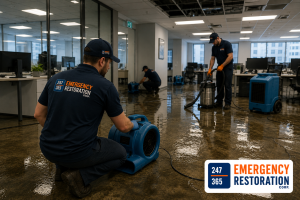
Professional restoration companies use specialized equipment that removes water far more effectively than household pumps or shop vacuums.
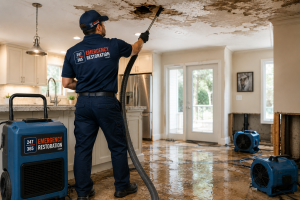
A complete restoration process typically includes:
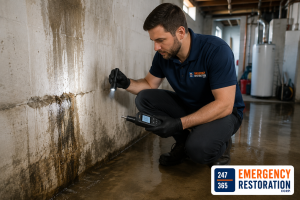
Professionals also use moisture meters and thermal imaging technology to detect hidden water behind walls and beneath flooring that homeowners cannot see.
Proper drying helps prevent long-term structural damage and mold growth.
Although no system is completely immune to failure, several preventive measures greatly reduce the risk of basement flooding.
Homeowners should:
Preventive maintenance is far less expensive than repairing a flooded basement.
A sump pump failure can flood your basement much faster than many homeowners realize. During heavy rain or rapid snowmelt, water can begin accumulating within minutes and cause extensive property damage in less than an hour.
The longer standing water remains inside your home, the greater the risk of structural damage, mold growth, ruined belongings, and expensive repairs.
If your basement floods after a sump pump failure, don’t wait. Contact 247-365 Restoration for 24/7 emergency flooded basement cleanup, professional water extraction, structural drying, and complete water damage restoration throughout Southern Ontario. Our experienced restoration specialists respond quickly to minimize damage, prevent mold, and restore your home safely and efficiently.
In severe storms, water can begin accumulating within minutes and cause significant flooding in less than an hour, depending on rainfall and groundwater conditions.
Power outages, mechanical wear, clogged discharge lines, and lack of maintenance are among the most common causes.
Yes. However, unusual noises, constant cycling, vibrations, or failure to activate are common warning signs.
Porous materials such as carpet, drywall, insulation, and padding may need replacement if they remain wet or become contaminated.
Yes. Mold can begin growing within 24–48 hours if standing water and excess moisture are not removed quickly.
50+ Restoration, Environmental, Inspection & Property Maintenance Services – 24/7 Across Southern Ontario