- Available 24/7 — 365 Days a Year
- Toronto & All GTA — Southern Ontario
- IICRC Certified · Insurance Approved
- Residential & Commercial Services

CALL NOW
(416) 657-2222

(416) 657-2222
Black mould, scientifically known as Stachybotrys chartarum, thrives in humid or water-damaged environments such as basements, bathrooms, and behind walls. Once it grows, it releases toxic spores that spread through the air and cause serious health issues, including: • Chronic coughing, wheezing, or shortness of breath • Asthma flare-ups and allergic reactions • Skin irritation and eye discomfort • Fatigue, dizziness, and headaches Even small patches can lead to long-term indoor air contamination. That’s why our 24/7 emergency response team treats every mould case as a health hazard — not just a cosmetic issue.
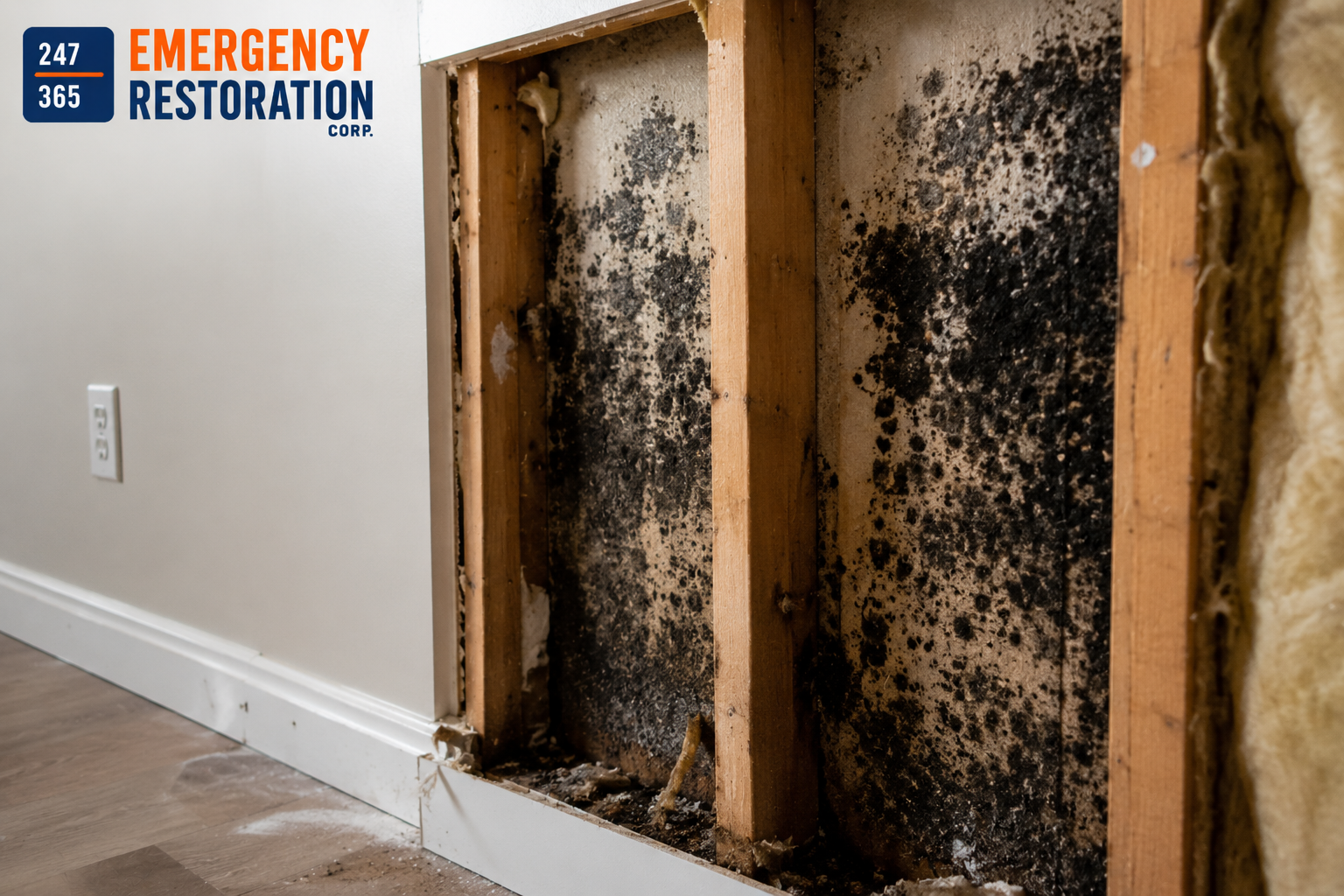
Hidden mould is one of the most common yet overlooked problems in Ontario homes. Unlike visible mould that grows on ceilings or bathroom tiles, hidden mould develops inside walls, behind drywall, under flooring, or above ceilings where it often goes unnoticed for months.
Because mould thrives in dark, damp environments, even a small plumbing leak or previous water damage can create ideal conditions for mould growth. Left untreated, hidden mould can damage building materials, reduce indoor air quality, and contribute to respiratory problems.
In this guide, we’ll explore the top 10 warning signs that you may have hidden mould behind your walls and explain when it’s time to call a professional mould removal company.
Mould spreads by releasing microscopic spores into the air. Once moisture is present, these spores can grow quickly on drywall, wood framing, insulation, carpeting, and other porous materials.
Hidden mould not only weakens your home’s structure but may also affect indoor air quality, making early detection extremely important.
A strong earthy or musty smell that doesn’t disappear is often the first sign of hidden mould. If the odour becomes stronger after rain or when your HVAC system is running, mould may be growing behind your walls.
Moisture trapped inside walls causes paint to bubble and wallpaper to peel. Even if you don’t see mould, excess moisture may indicate that mould is developing behind the surface.
Brown, yellow, or dark stains often suggest ongoing moisture intrusion. Water stains should never be ignored, as they frequently lead to hidden mould growth.
If you or your family experience sneezing, coughing, watery eyes, nasal congestion, or headaches primarily while at home, hidden mould may be affecting your indoor air quality.
Rooms that constantly feel damp or humid can create ideal conditions for mould growth. Bathrooms, basements, laundry rooms, and poorly ventilated areas are especially vulnerable.
Drywall that appears swollen, bowed, or uneven often indicates prolonged moisture exposure. Hidden mould commonly develops inside damaged drywall long before it becomes visible.
Walls that feel soft when pressed or begin crumbling around baseboards may have sustained water damage, allowing mould to grow inside wall cavities.
Frequent condensation on walls or windows can indicate excessive indoor humidity. Without proper ventilation, moisture accumulation increases the likelihood of hidden mould.
Any flood, burst pipe, roof leak, or appliance leak increases the risk of hidden mould. Even if surfaces appear dry, moisture trapped inside walls can support mould growth within 24 to 48 hours.
Small patches of mould near baseboards, window frames, or wall corners often indicate a much larger problem hidden behind the drywall.
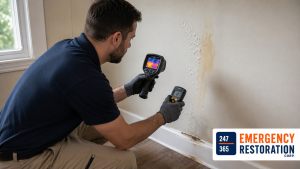
Professional mould inspectors use advanced equipment to locate moisture and mould without unnecessary demolition. Moisture meters measure water content inside building materials, thermal imaging cameras identify hidden moisture, and air quality testing can detect elevated mould spore levels throughout the home.
If you notice one or more of these warning signs, don’t wait for the problem to become worse. Hidden mould rarely disappears on its own and usually continues spreading as long as moisture remains.
A certified mould remediation company can identify the source of the moisture, safely remove contaminated materials, and restore healthy indoor air quality.
Hidden mould behind walls can remain undetected for months while silently damaging your home and affecting your family’s health. Recognizing the early warning signs allows you to address moisture problems before extensive mould growth occurs.
If you suspect hidden mould in your home, professional inspection and remediation are the safest and most effective solutions.
If you suspect hidden mould behind your walls, don’t wait until the damage becomes more serious. The certified team at 247-365 Restoration provides professional mould inspection, moisture detection, safe mould removal, and complete property restoration throughout Southern Ontario.
Contact us today for fast, reliable, and professional mould remediation services.
⏱️ 24/7 Professional Mould Removal in Toronto & the GTA
If you suspect hidden mould behind your walls, don’t wait until the damage becomes more serious.
🚨 Call 247-365 Restoration now at 416-657-2222
🌐 Learn more: https://247-365.ca/
Professional Mould Removal services — available 24/7.
Hidden mould is usually caused by excess moisture from plumbing leaks, roof leaks, flooding, high humidity, or poor ventilation. When moisture becomes trapped inside walls, mould can begin growing within 24 to 48 hours.
Common signs include musty odours, peeling paint, stained walls, warped drywall, allergy symptoms, and a history of water damage. Professional moisture detection equipment can confirm whether mould is present.
Hidden mould can affect indoor air quality and may trigger allergies, asthma symptoms, coughing, eye irritation, and other respiratory issues, particularly in sensitive individuals.
Small areas of visible mould may sometimes be cleaned safely, but mould hidden inside walls usually requires professional remediation to identify the moisture source, remove contaminated materials, and prevent the mould from returning.
Restoration professionals use moisture meters, thermal imaging cameras, and, when appropriate, air quality testing to locate hidden moisture and identify areas where mould is likely growing with minimal disruption to your home. testing.
50+ Restoration, Environmental, Inspection & Property Maintenance Services – 24/7 Across Southern Ontario