- Available 24/7 — 365 Days a Year
- Toronto & All GTA — Southern Ontario
- IICRC Certified · Insurance Approved
- Residential & Commercial Services

CALL NOW
(416) 657-2222
(416) 657-2222
When water starts dripping from your ceiling, time is everything. In this video, watch our expert crew at 247-365 Restoration respond to a real roof leak emergency—from initial inspection to damage control and complete repair.
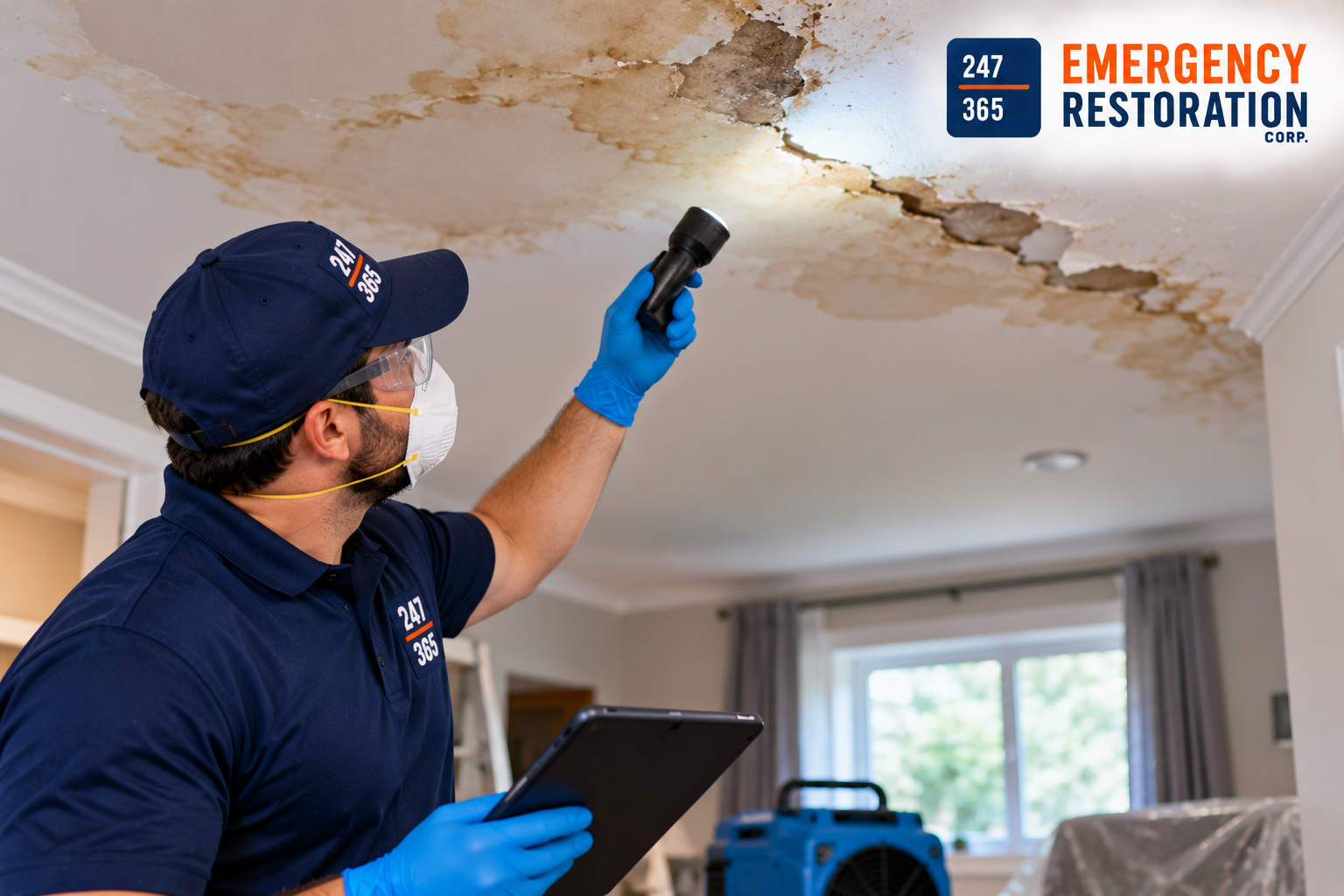
Ceiling water damage can lead to stained paint, bubbling drywall, sagging materials, mould growth, and costly repairs. Whether home insurance covers ceiling water damage restoration in Canada depends largely on what caused the water damage. Sudden and accidental incidents, such as a burst pipe or an unexpected appliance leak, may be covered, while gradual leaks, poor maintenance, and long-term deterioration are often excluded.
Understanding the difference between covered and excluded water damage can help homeowners respond quickly, document the incident, and avoid unnecessary delays during the insurance claims process.
In many cases, Canadian home insurance policies cover ceiling damage caused by sudden and accidental water events inside the home. For example, if a plumbing pipe unexpectedly bursts above the ceiling and water damages the drywall, insulation, paint, and flooring, the resulting damage may be eligible for insurance coverage.
However, coverage is not guaranteed. Insurance companies examine the source of the water, the circumstances surrounding the incident, and the policy’s exclusions.
Common situations that may qualify for coverage include:
A sudden burst or rupture in a plumbing pipe
An unexpected leak from a water supply line
An accidental overflow from a bathtub or sink
A sudden appliance malfunction that releases water
Water entering through a roof opening caused by an insured storm event
Some types of roof leaks and exterior water infiltration require additional coverage. Homeowners should review their policy to determine whether above-ground water protection is included.
Ceiling water damage can develop from several sources. Identifying the cause is essential because it can influence both the restoration process and the insurance claim.
Pipes located above ceilings, inside walls, or between floors can develop leaks or suddenly rupture. Water may spread through insulation and drywall before becoming visible.
A burst pipe can produce extensive damage in a short period, especially when the leak continues unnoticed.
Damaged shingles, deteriorated flashing, roof openings, and storm-related damage can allow water to enter the attic and travel toward the ceiling.
Whether the resulting damage is covered depends on the cause of the roof opening and the policy’s water damage provisions. Gradual deterioration and poor maintenance are commonly excluded.
Bathrooms located above living rooms, bedrooms, or kitchens can create ceiling damage when showers, bathtubs, toilets, or plumbing connections leak.
A sudden plumbing failure may qualify for coverage, while long-term leakage caused by an unresolved maintenance issue may not.
Condensation drainage problems, damaged drain lines, and equipment malfunctions can sometimes release water into ceiling cavities.
Regular inspection and maintenance can help identify these problems before they cause significant damage.
During winter, ice dams can prevent melting snow from draining properly from the roof. Water may accumulate and enter the building through vulnerable roof areas.
Coverage for resulting damage depends on the circumstances and the specific policy wording.
When the underlying incident is insured, a home insurance policy may cover several types of resulting property damage.
Eligible restoration expenses may include:
Water extraction and emergency mitigation
Removal of damaged drywall and ceiling materials
Cleaning and drying affected areas
Replacement of damaged insulation
Repairs to ceilings, walls, and other affected structures
Painting and finishing after restoration
Repair or replacement of eligible damaged personal belongings
The insurance company may also cover additional living expenses if the damage makes the home temporarily uninhabitable, subject to policy conditions.
One important distinction is that insurance may cover the resulting water damage without covering the cost of repairing the failed pipe, appliance, or other source of the leak.
Home insurance is generally designed to protect against unexpected losses rather than routine maintenance or preventable deterioration.
Common exclusions or coverage limitations may include:
Gradual leaks: Water that escapes slowly over an extended period may be excluded, particularly when the problem could have been identified and repaired earlier.
Poor maintenance: Damage caused by neglected roofing, deteriorating plumbing, or unresolved maintenance problems may not qualify for coverage.
Wear and tear: Insurance generally does not pay for ordinary aging or deterioration of building materials.
Unresolved roof problems: A roof that has been leaking repeatedly because of neglected repairs may create difficulties when filing a claim.
Mould caused by long-term moisture: Mould resulting from prolonged moisture or an excluded water event may not be covered. Some policies provide limited mould coverage under specific circumstances.
Flooding and external water: Rainwater entering through the roof, walls, windows, or doors may require a specific above-ground water endorsement. Sewer backup and overland flooding may also require separate optional coverage.
The exact exclusions vary between insurers, so homeowners should review their policy rather than rely on general coverage assumptions.
Recognizing early warning signs can help prevent minor water problems from becoming extensive restoration projects.
Look for these common indicators:
Brown or yellow stains on the ceiling
Peeling or bubbling paint
Soft or swollen drywall
Sagging ceiling sections
Damp or musty smells
Visible mould spots
Water dripping from ceiling fixtures
Cracks or changes in ceiling texture
A sagging ceiling may indicate that water has accumulated above the drywall. Do not touch or puncture a bulging area. Keep people away and arrange a professional assessment.
If water is near electrical fixtures, avoid contact with the affected area and seek qualified electrical assistance.
Taking the right steps immediately after discovering a leak can help reduce further damage and support the insurance claims process.
If it is safe to do so, shut off the water supply if a plumbing failure is suspected. If the source is a roof leak, arrange appropriate temporary protection when it can be done safely.
Do not climb onto a wet or damaged roof.
Move furniture, electronics, and valuable belongings away from the affected area when safe. Keep people away from sagging ceilings and areas where water is near electrical equipment.
Take photographs and videos showing the ceiling stains, visible water, damaged belongings, and affected rooms. Record when the damage was discovered and any information about the suspected source.
Report the incident promptly. Ask about coverage, deductibles, approved emergency procedures, documentation requirements, and whether an adjuster needs to inspect the property before repairs begin.
A qualified restoration professional can inspect the affected areas, identify moisture that may be hidden behind building materials, and recommend appropriate drying and restoration procedures.
Save estimates, invoices, photographs, inspection reports, and communications with your insurer. These records can help support your claim.
Homeowners should not delay necessary emergency mitigation while waiting for a claim decision. Follow the insurer’s instructions and take reasonable steps to prevent additional damage.
Professional restoration involves more than repainting a stained ceiling. Water can travel through insulation, framing, and wall cavities, leaving moisture in areas that are not immediately visible.
A typical restoration process includes several stages.
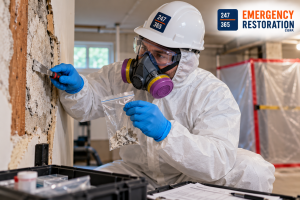
Technicians inspect the affected ceiling and surrounding areas. Moisture meters and other appropriate equipment can help identify wet materials and determine the extent of water intrusion.
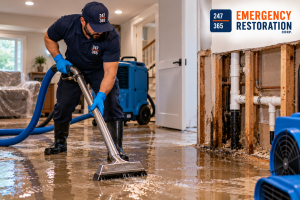
If standing water is present, technicians use suitable extraction equipment to remove it and limit further damage.
Water-damaged drywall, insulation, or other materials may need to be removed if they cannot be safely dried or restored.
Professional drying equipment helps remove remaining moisture from affected building materials. Moisture levels should be monitored to confirm that the drying process is progressing appropriately.
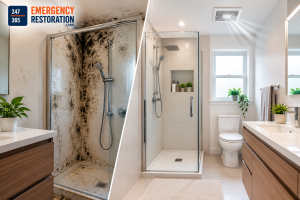
Affected surfaces are cleaned using procedures appropriate to the contamination and material type. If mould is present, its extent and the underlying moisture source should be assessed before remediation.
Once the affected areas are sufficiently dry and suitable for rebuilding, damaged drywall and insulation can be replaced. The ceiling can then be finished, primed, and painted.
The exact process depends on the water source, the extent of the damage, and the condition of the building materials.
The cost of ceiling water damage restoration varies depending on the size of the affected area, the source of the water, and the amount of material requiring removal or replacement.
Factors that can influence the total restoration cost include:
Size of the damaged ceiling
Amount of water involved
Duration of moisture exposure
Type of ceiling material
Damage to insulation and structural components
Need for specialized drying equipment
Cleaning and mould remediation requirements
Painting and reconstruction work
A small ceiling stain caused by a minor, quickly repaired leak may require limited work. A major plumbing failure that affects multiple rooms can require extensive drying, demolition, and reconstruction.
A professional inspection is the best way to determine the scope of work and obtain a reliable estimate.
Preventive maintenance can reduce the risk of leaks and help homeowners identify problems before they become serious.
Consider these practical measures:
Inspect the roof periodically for damaged or missing shingles.
Check plumbing connections and visible pipes for leaks.
Inspect bathrooms and plumbing fixtures located above finished ceilings.
Maintain HVAC systems and condensation drainage lines.
Keep gutters and downspouts clear.
Address water stains and unusual odours promptly.
Insulate vulnerable pipes to reduce the risk of freezing.
Arrange professional inspections when recurring moisture problems appear.
Homeowners should also review their insurance policies regularly to understand the limits and exclusions related to water damage.
Ceiling water damage can affect more than the visible surface. Moisture may spread into insulation, wooden framing, electrical components, and nearby walls. Without proper assessment and drying, hidden moisture can contribute to deterioration and mould growth.
Professional water damage restoration helps identify the source of the problem, assess affected materials, remove excess water, and determine the appropriate drying and repair procedures.
247-365 Emergency Restoration Corp. can be a point of contact for discussing water damage assessment and restoration requirements, subject to actual service availability and coverage.
If you discover a ceiling leak, act promptly, prioritize safety, document the damage, and contact your insurance provider to understand the next steps.
It may. Many Canadian home insurance policies cover sudden and accidental water damage caused by an unexpected plumbing failure. However, gradual leaks and maintenance-related damage may be excluded.
It depends on what caused the roof leak and the policy wording. Damage resulting from a sudden insured event may qualify, while gradual deterioration and poor maintenance are commonly excluded. Some forms of exterior water infiltration require optional coverage.
Mould coverage varies by policy. Some insurers may cover limited mould remediation when it results from a covered water loss and the homeowner takes reasonable steps to prevent further damage. Long-term moisture and maintenance-related mould may be excluded.
Not always. Some drywall may be dried and retained if it remains structurally sound and can be safely restored. Materials that are saturated, deteriorated, contaminated, or unable to dry properly may need to be removed and replaced.
The source of the water should be addressed immediately, and affected materials should be assessed as soon as possible. Prompt drying and appropriate repairs can help limit further damage and reduce the risk of mould growth.
50+ Restoration, Environmental, Inspection & Property Maintenance Services – 24/7 Across Southern Ontario