- Available 24/7 — 365 Days a Year
- Toronto & All GTA — Southern Ontario
- IICRC Certified · Insurance Approved
- Residential & Commercial Services

CALL NOW
(416) 657-2222
(416) 657-2222
Fire & Soot Cleaning
A fire can devastate a property in minutes — but the damage doesn’t end when the flames are out. Smoke, soot, and toxic residues can linger for weeks, affecting your air quality, damaging furniture, and threatening your health.
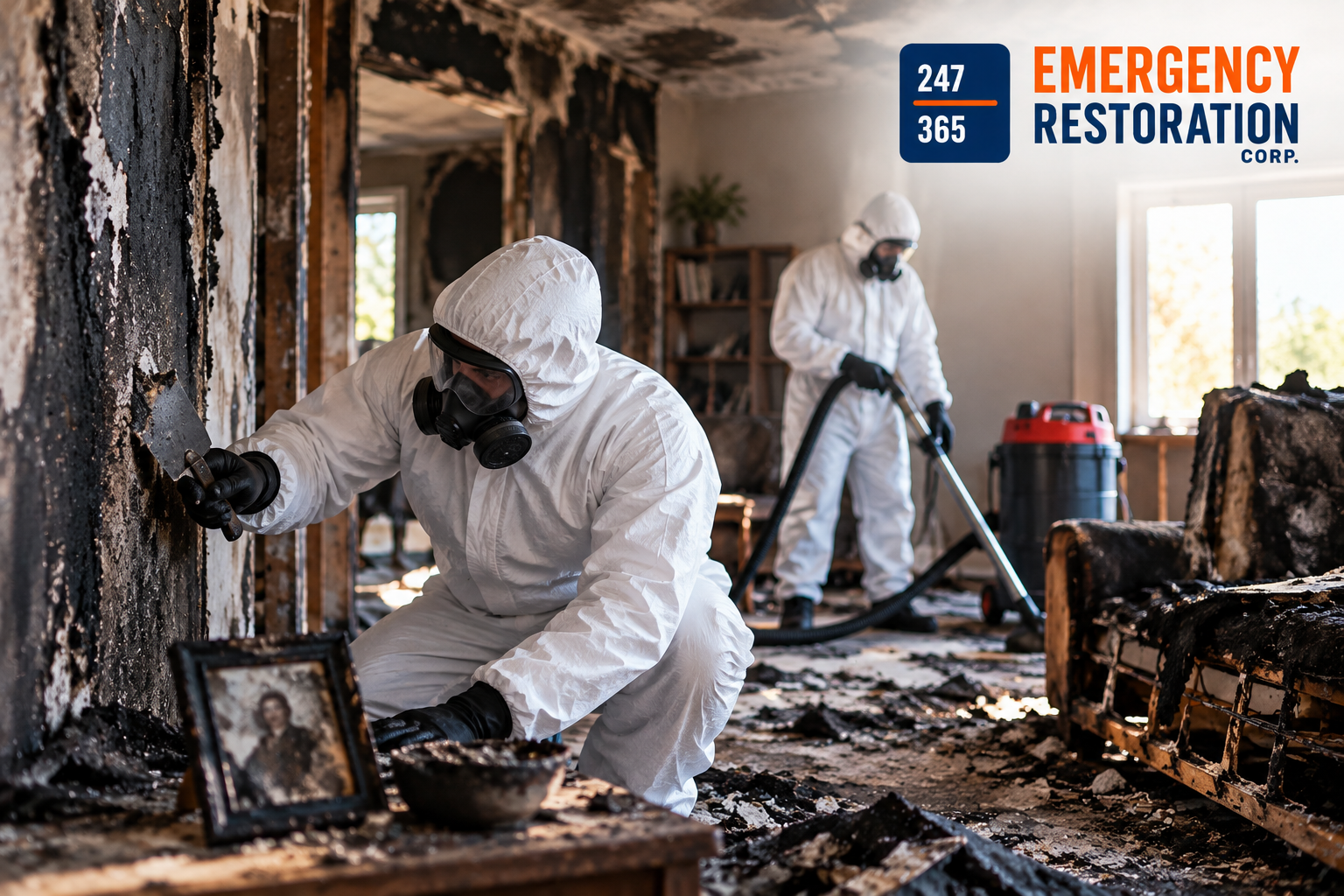
A property fire can cause far more damage than what is visible immediately after the flames are extinguished. While burned furniture, damaged walls, and charred materials are easy to identify, many serious problems can remain hidden throughout the property. Smoke, soot, water, structural damage, and lingering odors can continue affecting a building long after the fire department has left.
Understanding the common problems that remain after a property fire can help property owners recognize hidden risks and take appropriate action. Professional fire damage restoration is often necessary to properly assess, clean, repair, and restore affected areas.
Smoke and soot are among the most common problems following a property fire. Even areas that were not directly touched by flames can be affected by smoke particles.
Smoke can travel through ventilation systems, doorways, ceilings, and wall cavities, spreading throughout the property. Soot may settle on walls, ceilings, floors, furniture, appliances, and personal belongings.
Different types of fires can also produce different kinds of smoke residue. Some soot can be oily and difficult to remove, while other residues may leave a powdery or sticky layer on surfaces.
Without proper cleaning, soot can continue damaging surfaces and materials. Professional restoration teams use specialized cleaning methods and equipment to remove smoke and soot while reducing the risk of additional damage.
Smoke odor can remain inside a property long after visible smoke has disappeared. The smell can become trapped in carpets, upholstery, curtains, insulation, drywall, wood, and other porous materials.
Simply opening windows or using household air fresheners may temporarily mask the odor without addressing its source. In some situations, smoke particles can remain inside wall cavities, HVAC systems, and other hidden areas.
Professional odor removal may involve specialized cleaning, deodorization, air filtration, and other restoration techniques depending on the severity and type of fire damage.
One of the less obvious problems after a fire is water damage caused by firefighting efforts. Firefighters may need to use large amounts of water to control and extinguish the fire.
Water can soak into flooring, drywall, insulation, ceilings, furniture, and structural materials. If it is not addressed quickly, excess moisture can lead to additional deterioration and microbial growth.
Standing water should be removed as soon as it is safe to access the property. Professional restoration specialists can assess moisture levels, extract water, dry affected areas, and identify materials that may require repair or replacement.
A building may appear structurally stable after a fire while still having damage that is not immediately visible.
Heat can weaken wood, framing, roofing components, flooring systems, and other structural elements. Fire can also affect electrical systems, plumbing components, insulation, and load-bearing materials.
For this reason, property owners should avoid assuming that an area is safe simply because it looks intact. Structural and safety assessments should be completed before normal occupancy or reconstruction begins.
Fire and extreme heat can damage electrical wiring, outlets, panels, fixtures, and appliances. Water used during firefighting can create additional electrical hazards.
Even if electrical components appear undamaged from the outside, internal wiring may have been affected by heat, smoke, or moisture.
A qualified professional should inspect electrical systems before they are returned to service. Attempting to use damaged electrical equipment can create additional safety risks.
Heating, ventilation, and air conditioning systems can spread smoke and soot throughout a property. If smoke enters ductwork, contaminants may be distributed into rooms that were not directly affected by the fire.
HVAC components may also contain soot and odor-producing particles after a fire.
Depending on the situation, professional inspection and cleaning of the HVAC system may be necessary before normal operation resumes. Addressing the system can help prevent smoke residue from continuing to circulate.
Moisture left behind after firefighting can create conditions that support mold growth. Mold can develop in damp drywall, insulation, flooring, ceilings, and other moisture-affected materials.
The risk can increase when water remains trapped in areas that are difficult to see, such as behind walls or beneath flooring.
Prompt drying and moisture control are important parts of post-fire restoration. If visible mold or suspected hidden moisture is present, professional inspection can help determine the appropriate remediation approach.
Personal belongings can suffer from fire, smoke, soot, heat, and water damage. Items that appear salvageable may still contain smoke odors or soot residue.
Furniture, clothing, electronics, documents, artwork, and household items may require specialized cleaning or restoration.
Professional contents restoration can help determine which belongings may be cleaned and restored and which items may need replacement. Proper documentation of damaged belongings can also be useful when working with an insurance provider.
A property fire can create residues that should not be handled casually. Burning plastics, synthetic materials, insulation, building products, and household chemicals can produce potentially harmful contaminants.
Ash and debris should therefore be handled carefully, especially in areas with significant fire damage.
Professional fire damage restoration companies use appropriate procedures and protective equipment when cleaning and removing damaged materials. In situations involving potentially hazardous substances, specialized professionals may also be required.
Some of the most difficult fire-related problems are located behind walls, ceilings, floors, and other finished surfaces.
Smoke can enter wall cavities, while water can become trapped behind drywall or underneath flooring. Heat can also affect materials that do not show obvious exterior damage.
A t
Smoke odor, soot, water damage, structural issues, mold, and electrical problems can remain after a fire.
Yes. Smoke and soot can travel through walls, ceilings, HVAC systems, and other areas.
Yes. Firefighting water can soak into walls, flooring, insulation, and furniture.
Smoke odors can persist for weeks or longer if affected materials are not professionally cleaned.
Professional restoration can help identify hidden damage, remove smoke and soot, dry affected areas, and restore damaged property.
50+ Restoration, Environmental, Inspection & Property Maintenance Services – 24/7 Across Southern Ontario