- Available 24/7 — 365 Days a Year
- Toronto & All GTA — Southern Ontario
- IICRC Certified · Insurance Approved
- Residential & Commercial Services

CALL NOW
(416) 657-2222

(416) 657-2222
Think your attic is clean and safe?
In this exclusive attic mold inspection video, the 247-365 Restoration team shows how easily mold can hide above your ceiling—and what it takes to find and fix it before it affects your air quality, insulation, or structure.
Join our certified mold specialists as they conduct a real attic mold inspection in the Greater Toronto Area (GTA). Watch the step-by-step process as we identify moisture, detect black mold, and explain how your attic might be compromising your home’s safety and efficiency.
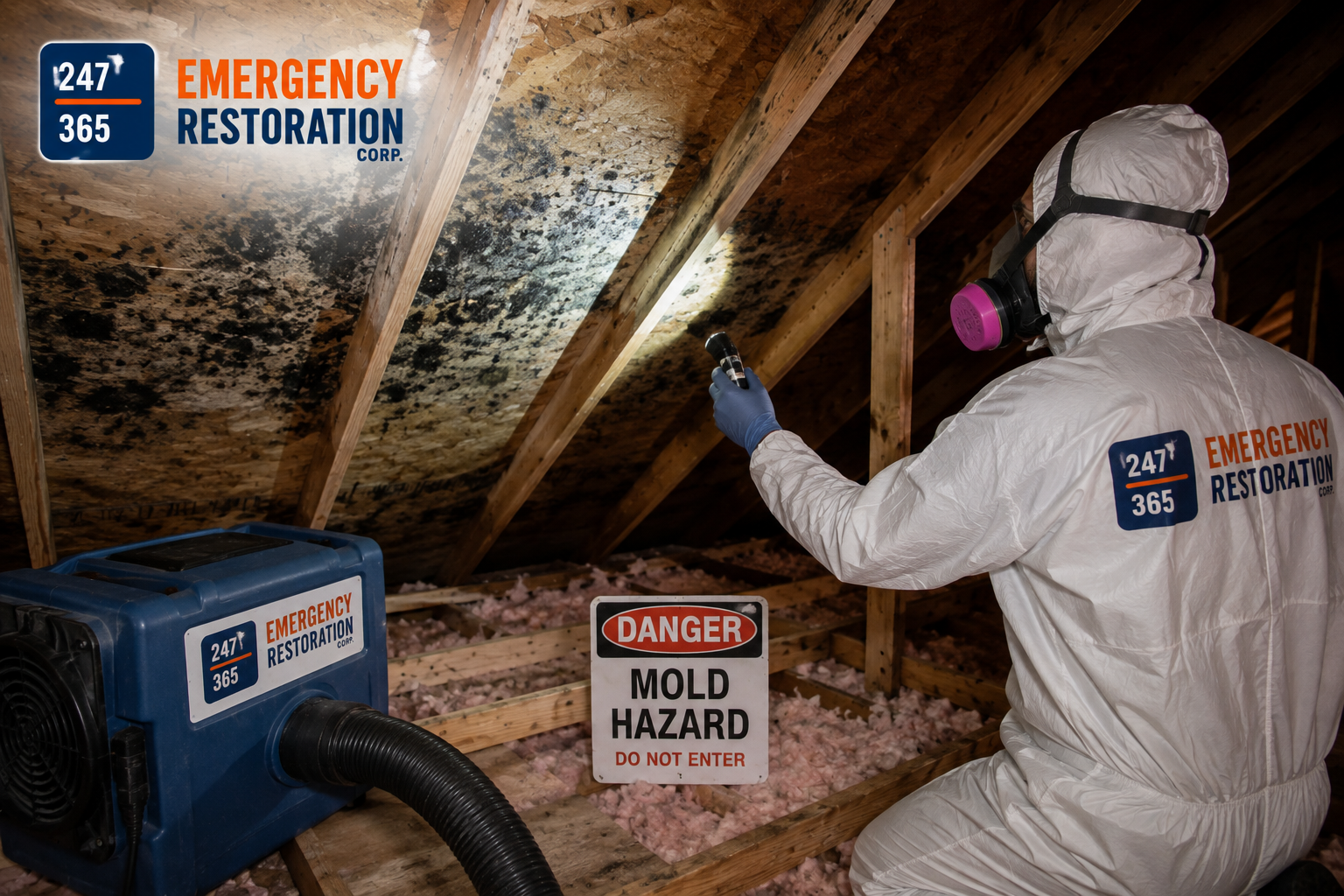
Most homeowners rarely visit their attic, making it one of the easiest places for mold to grow unnoticed. A small roof leak, poor ventilation, or excess humidity can create the perfect environment for mold to thrive. While many people believe attic mold is isolated and harmless as long as it remains out of sight, the reality is quite different. Mold growing in your attic can spread throughout your home, affecting indoor air quality, damaging structural materials, and potentially impacting your family’s health.
If you suspect mold in your attic, understanding how it spreads and why professional remediation is important can help you prevent costly repairs and long-term health concerns.
Attics are particularly vulnerable to mold because they often experience fluctuating temperatures and moisture levels. Mold only needs moisture, oxygen, and an organic surface such as wood to begin growing.
Some of the most common causes of attic mold include:
Even a small amount of moisture over time can allow mold colonies to develop on rafters, plywood, and insulation.
Yes. Although mold begins in one location, it rarely stays there forever.
Mold reproduces by releasing microscopic spores into the air. These spores are invisible to the naked eye and are easily carried throughout your home by normal airflow.
Spores may spread through:
Every time your heating or cooling system operates, air moves between different areas of the house. If mold spores are present in the attic, they can enter your living spaces and settle on damp surfaces where they may begin growing again.
One reason attic mold spreads so easily is a phenomenon called the stack effect.
Warm air naturally rises through your home. During colder months, heated indoor air moves upward toward the attic. As this air escapes through small openings around light fixtures, plumbing, wiring, and attic access doors, it carries moisture—and potentially mold spores—with it.
When pressure changes occur inside the home, spores can also travel back down into bedrooms, hallways, and living areas, affecting indoor air quality throughout the property.
Many homeowners don’t discover attic mold until the problem has become widespread.
Some of the most common warning signs include:
A musty smell that won’t go away often indicates hidden mold somewhere in the home.
People living in the home may experience:
Symptoms often improve after leaving the house.
Brown, yellow, or dark stains on ceilings may indicate roof leaks and hidden attic moisture.
Mold appearing around windows, closets, or upper walls may be a sign that spores have spread beyond the attic.
If your home constantly feels damp despite normal weather conditions, moisture problems may be contributing to attic mold growth.
Although not every mold species produces toxins, mold should never be ignored.
Exposure to mold spores may contribute to:
Young children, older adults, and individuals with compromised immune systems are generally more sensitive to mold exposure.
Improving indoor air quality begins by eliminating the source of contamination.
Many homeowners attempt to clean attic mold using bleach or household cleaners. Unfortunately, this rarely solves the underlying problem.
Scrubbing mold without proper containment can release thousands of additional spores into the air, allowing contamination to spread even further throughout the home.
Household cleaners also fail to address moisture issues, meaning mold often returns within weeks or months.
Professional remediation focuses on both removing the mold and correcting the conditions that caused it.
Professional mold remediation involves much more than cleaning visible mold.
Certified technicians typically follow a comprehensive process that includes:
A complete inspection identifies moisture sources, mold growth, and hidden contamination.
Thermal imaging cameras and moisture meters help locate water intrusion behind walls and ceilings.
Plastic barriers and negative air pressure systems isolate affected areas to prevent spores from spreading.
Industrial HEPA air scrubbers continuously remove airborne mold spores during remediation.
Contaminated materials are safely cleaned or removed using industry-approved techniques.
Professional antimicrobial solutions help eliminate remaining mold colonies and reduce future growth.
The final step addresses roof leaks, ventilation problems, or condensation issues to prevent mold from returning.
The best way to protect your home is to prevent mold before it begins.
Homeowners should:
Routine maintenance is far less expensive than major mold remediation.
You should contact a mold remediation company if:
Early intervention can significantly reduce remediation costs while preventing mold from spreading throughout the home.
Attic mold is far more than an isolated problem hidden above your ceiling. Left untreated, mold spores can spread through your home’s air circulation system, reducing indoor air quality, damaging structural materials, and creating health risks for your family. Addressing mold early helps prevent expensive repairs and protects the long-term value of your property.
At 247-365 Emergency Restoration Corp., we provide professional attic mold inspection, mold testing, moisture detection, and complete attic mold remediation services across Southern Ontario. Our certified technicians use advanced HEPA filtration, specialized containment systems, and proven remediation techniques to safely eliminate mold and address the moisture issues that caused it.
If you suspect attic mold in your home, don’t wait until it spreads. Contact 247-365 Emergency Restoration Corp. today for fast, reliable, and professional attic mold removal services available 24 hours a day, 7 days a week.
Yes. Mold spores can travel through air movement, HVAC systems, wall cavities, and ceiling penetrations, affecting other areas of your home.
It can be. Mold exposure may cause allergies, respiratory irritation, asthma flare-ups, and other health concerns, especially for sensitive individuals.
The most common causes include roof leaks, poor attic ventilation, high humidity, and condensation
Small surface mold may be manageable, but widespread attic mold should be handled by professionals using proper containment and HEPA filtration to prevent spores from spreading. penalties.
Repair roof leaks, improve attic ventilation, control indoor humidity, and schedule regular mold inspections if you've experienced moisture problems.
50+ Restoration, Environmental, Inspection & Property Maintenance Services – 24/7 Across Southern Ontario