- Available 24/7 — 365 Days a Year
- Toronto & All GTA — Southern Ontario
- IICRC Certified · Insurance Approved
- Residential & Commercial Services

CALL NOW
(416) 657-2222

(416) 657-2222
Asbestos Testing
Asbestos may be invisible, but the danger is real. Found in thousands of older buildings across the GTA, asbestos fibers can silently harm your health when disturbed—causing serious long-term diseases like asbestosis, mesothelioma, and lung cancer.
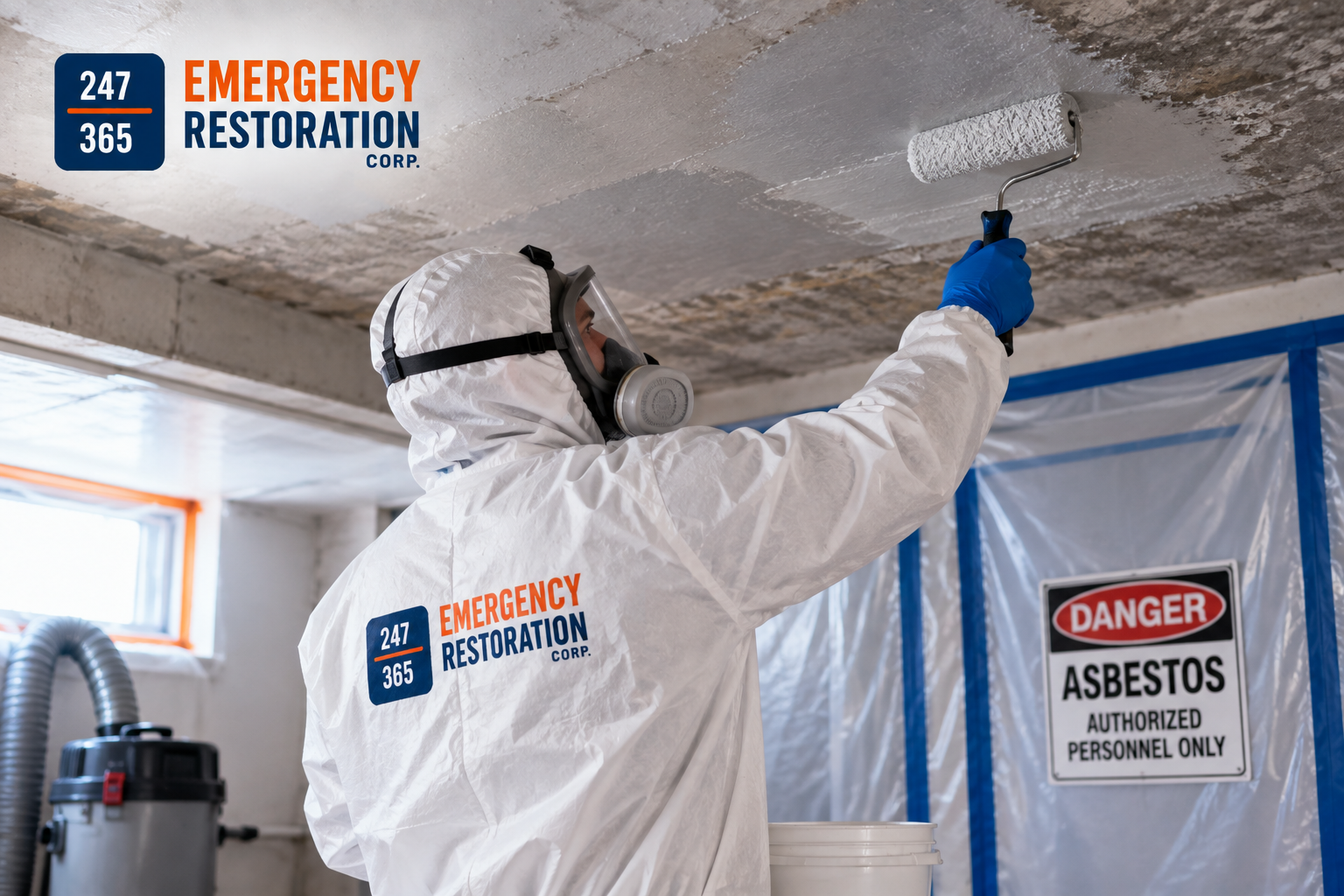
Asbestos can remain in older homes and commercial buildings in materials such as insulation, plaster, flooring, roofing products, and other construction components. When asbestos-containing materials are intact and left undisturbed, they may not present the same exposure concern as damaged or disturbed materials. However, when these materials deteriorate or are likely to be disturbed during renovation, property owners need to consider an appropriate management or abatement strategy.
One option that may be considered in certain situations is asbestos encapsulation. Encapsulation involves applying an appropriate sealant to an asbestos-containing material to bind fibers together or create a protective coating that helps prevent fiber release. While this approach can be useful in specific circumstances, it is important to understand that encapsulation does not remove the asbestos from the building.
Asbestos encapsulation is an in-place management method. Instead of removing the asbestos-containing material, a specialized encapsulant is applied to the material.
The purpose is to help prevent asbestos fibers from becoming airborne.
There are generally two concepts associated with controlling asbestos in place:
The appropriate method depends on the material, its condition, its location, and the circumstances of the building. EPA guidance notes that encapsulation should be performed by professionals trained to handle asbestos safely.
Encapsulation can be an appropriate asbestos-management option in selected situations, but it should not automatically be considered a universally safe or permanent solution.
The condition and characteristics of the asbestos-containing material are critical. EPA guidance explains that if asbestos-containing material is in good condition, an operations and maintenance program may sometimes be sufficient. When material is significantly damaged, additional abatement measures may be necessary.
The decision should therefore be based on a professional assessment rather than simply choosing encapsulation because it appears easier than removal.
No.
This is one of the most important points property owners should understand.
Encapsulation leaves the asbestos-containing material in place. The sealant is intended to reduce the potential for fiber release, but the underlying material remains part of the building.
Health Canada similarly advises that asbestos-containing materials can remain in place when they are in good condition, tightly bound, sealed behind building materials, and left undisturbed. It recommends professional testing before renovation or remodeling work that could disturb suspected asbestos.
Because the asbestos remains in the building, future maintenance and renovation planning are important.
It can provide long-term management in appropriate circumstances, but it should not be described as a maintenance-free permanent solution.
EPA’s asbestos management guidance emphasizes the importance of an ongoing operations and maintenance program when asbestos-containing materials remain in a building. Such a program can include monitoring the condition of the material, preventing disturbance, maintaining records, and periodically reviewing the management plan.
In other words, encapsulation can be part of a long-term asbestos management strategy, but the encapsulated material still needs to be managed.
The suitability of encapsulation depends on the specific asbestos-containing material.
Factors that professionals may consider include:
EPA’s technical guidance identifies important limitations for encapsulation, including materials with poor cohesive or adhesive strength, accessible materials that are likely to be repeatedly disturbed, and water-damaged asbestos-containing materials.
This is why a professional inspection should come before selecting a treatment method.
Encapsulation is not suitable for every asbestos-containing material.
For example, if the material is deteriorating, poorly bonded, water-damaged, or likely to be repeatedly disturbed, simply applying a coating may not adequately address the underlying problem.
EPA’s guidance specifically notes that encapsulation should not be treated as a universal solution and that certain conditions can make it unsuitable.
Renovation is another important consideration. If planned work will disturb asbestos-containing materials, the appropriate approach may change. Health Canada recommends professional asbestos testing before major renovation, remodeling, or demolition work.
The biggest difference is straightforward:
Encapsulation: The asbestos-containing material stays in place and is treated to reduce the potential for fiber release.
Removal: The asbestos-containing material is removed from the building using appropriate asbestos-control procedures.
Removal may be necessary when materials are extensively damaged or when renovation or demolition will disturb them. EPA states that asbestos removal is complex and should be performed by trained and accredited asbestos professionals.
Neither approach should be selected based solely on cost. The condition and location of the material, future building plans, applicable regulations, and professional assessment all matter.
Before deciding whether encapsulation is appropriate, the material should be properly identified and assessed.
A trained and accredited asbestos inspector can inspect suspected materials and, when appropriate, arrange for sampling and laboratory analysis. EPA recommends an initial inspection by a trained and accredited inspector to locate and assess asbestos-containing materials and determine their condition and potential for disturbance.
This is especially important in older buildings where construction materials may contain asbestos.
Homeowners should avoid drilling, cutting, sanding, scraping, or otherwise disturbing suspected asbestos-containing materials before professional assessment.
If encapsulation is selected, the work should be performed according to the requirements applicable to the specific project.
The professional may first assess the material’s condition and determine whether it is suitable for encapsulation. Appropriate preparation, containment, protective equipment, and application procedures may then be used.
Afterward, the encapsulated material should remain part of the building’s asbestos management plan.
The location and condition of the material should be documented so future contractors and property owners know that asbestos remains present.
Encapsulation does not eliminate the need for future attention.
Building conditions can change. A wall may be opened during renovation, a pipe may leak, or a ceiling or other surface may suffer physical damage.
EPA’s operations and maintenance guidance emphasizes monitoring asbestos-containing materials and maintaining them in good condition to minimize potential fiber release.
Property owners should therefore keep records of the location of encapsulated materials and inform contractors before renovation or maintenance work begins.
Renovation planning is one of the most important reasons to reassess an encapsulated asbestos-containing material.
If future work involves drilling, cutting, removing walls, replacing ceilings, disturbing insulation, or performing demolition, the encapsulated material could potentially be disturbed.
Before beginning renovation, the area should be evaluated by an appropriately qualified asbestos professional. Health Canada specifically recommends professional testing before major renovations or remodeling where asbestos may be present.
Yes. Moisture trapped inside wall cavities can create conditions that allow mould to grow.
It is the broader process of drying, cleaning, repairing, and restoring areas affected by water damage.
Yes. Water extraction is usually one of the first steps in the restoration process.
It helps remove excess water quickly and reduce the risk of further moisture-related damage.
Not always. The required service depends on the amount of water, affected materials, and extent of the damage.
50+ Restoration, Environmental, Inspection & Property Maintenance Services – 24/7 Across Southern Ontario